
Beethoven's capital
"All these notes don't pay my needs!!"
BackHow did Beethoven as a freelance artist earn his living without permanent employment? And did you know that
Beethoven held stocks?
This Internet exhibition gives a brief insight into the cost of living during Beethoven's time as well as
the composer's source of income to understand his financial situation and the impact of the economic
conditions prevalent at this time.
Selected documents and objects from the extensive collection of the Beethoven-Haus, documents from the
Archives of the Gesellschaft der Musikfreunde in Wien, contemporary means of payment, copper, silver and
gold coins as well as different bills from the Austrian National Bank illustrate the relationship between
Beethoven's earnings and his financial plight.

From court musician to freelance artist
As the son of a court musician and grandson of the former court bandmaster, Beethoven soon became a court musician for the Elector of Cologne. A wunderkind career like Mozart's, which his father intended for him, could not be realised. As a 12-year-old, Beethoven already deputised for court organist Christian Gottlob Neefe. When the court band was reorganised at the change of government between Elector Maximilian Friedrich and Maximilian Franz, the 14-year-old boy was permanently employed as second court organist. His pay amounted to 150 florins; his father received 300 florins. In 1787, Beethoven was sent to Vienna for studies but had to return after only two weeks when his mother fell seriously ill.
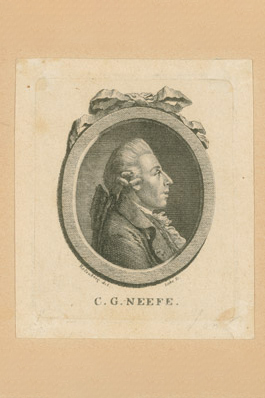
Beethoven-Haus Bonn, B 135/a
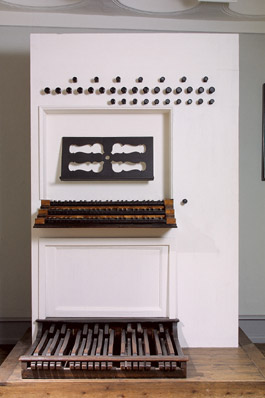
Beethoven-Haus Bonn, Mö 7
From court musician to freelance artist
The first years in Vienna
In 1792, Beethoven went again to Vienna for studies. This time he was never to return to Bonn. Before his departure, one of his most important patrons, Count von Waldstein, signed Beethoven's album with the famous words "You shall receive Mozart's spirit from Haydn's hands". Beethoven was granted leave of absence by the Elector and received a scholarship of 100 thalers.
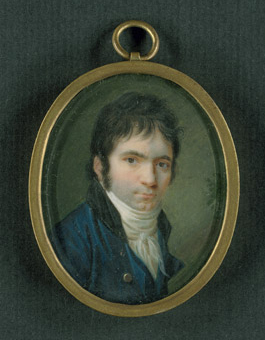
Beethoven-Haus Bonn, Collection H. C. Bodmer, HCB Bi 1
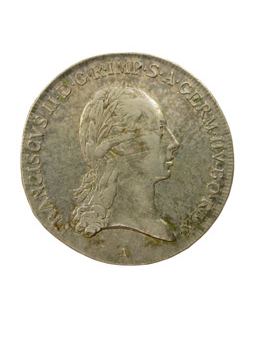

Austrian National Bank
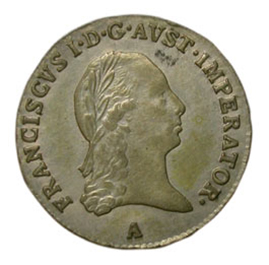
Until the proclamation of the Austrian Empire in 1804 all Austrian Convention coins showed a
small St. Andrew's cross after the date as distinctive mark.
In Vienna Beethoven quickly socialised with the art-loving aristocratic society of the music metropolis. His travel diary bears a few entries of his expenses during the beginning of his time in Vienna: The monthly rent for his room was 14 florins, meal and wine cost 16 florins. The 150 florins Beethoven received from the Bonn Elector were thus not enough to live on, let alone pay the rent. Various activities such as teaching and playing the piano at noble salons soon made him known as an artist and ensured the support of the nobility in later years.
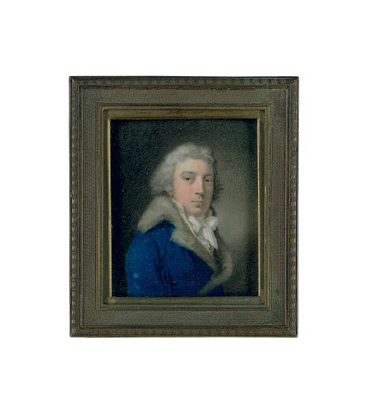
Beethoven-Haus Bonn, B 2413

Austrian National Bank
In 1800, Prince Karl von Lichnowsky provided Beethoven with an annual salary of 600 florins that was to be paid until Beethoven had a regular income. In a letter to his Bonn friend Franz Gerhard Wegeler, Beethoven was quite optimistic, if not euphoric, about his current living conditions and wrote about the yearly payment Lichnowsky granted him until he would find a suitable position, that his compositions paid well and that between six and seven publishers were always interested in his works so that he was the one who demanded and they would pay. He mentioned his strongly economical life and that he aimed at having one day for an Academy concert each year. On 2 April 1800, Beethoven had held the first concert for his own benefit at the renowned Hofburg Theatre. Although he set great store by his independence even back then, he strove for a well-paying position. After his employment as opera composer and bandmaster at the Theatre an der Wien between 1803 and 1804 he directly applied to the Royal Court Theatre at the end of 1807. However, he asked for the exorbitant sum of 2,400 florins (even bandmaster Salieri only earned 1,200 florins) as well as the earnings from the third performance of the opera he was to compose each year. In exchange for another free work, he also wanted to use the existing premises once a year to hold a concert for his own benefit. Beethoven's application was rejected.
Beethoven's work scholarship granted by Prince Lobkowitz, Prince Kinsky and Archduke Rudolph
Conclusion of the "annuity agreement"
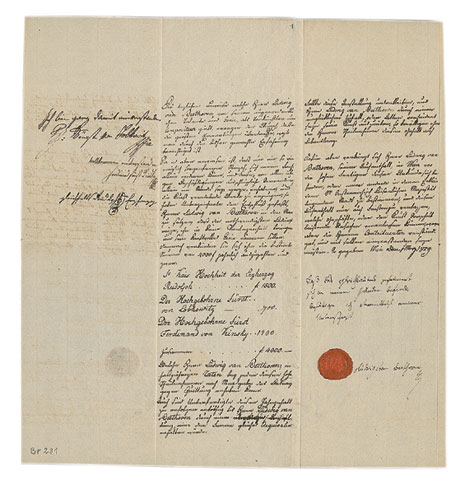
Beethoven-Haus Bonn, Collection H. C. Bodmer, HCB Br 281
"The daily proofs Mister Ludwig van Beethoven gives of his exceptional gift and genius as
musician and composer nourish the wish he may exceed the highest expectations, quite justified
when considering what he has achieved so far. As it is fairly clear that one needs to be free of
worries to fully dedicate oneself to a cause and create grand and outstanding works, the
signatories have decided to enable Mister Ludwig van Beethoven to fulfil his most relevant
necessities in order to not inhibit his powerful genius. Therefore, they bind themselves to pay
him an annual salary of 4000 fl., broken down into the following sums:
His Imperial Highness Archduke Rudolph fl. 1500
Highborn Prince Lobkowitz fl. 700
Highborn Prince Ferdinand von Kinsky fl. 1800
together fl. 4000 -
which Mister Ludwig van Beethoven shall demand of these honourable contributors in half-yearly
instalments against receipt.
The signatories bind themselves to provide this salary until Mister Ludwig van Beethoven
receives a regular payment equivalent to this sum through employment.
In case Mister Ludwig van Beethoven does not obtain such employment or mishap and age
inhibit him from fulfilling his task, the contributors will grant him this salary for
life.
In exchange Mister Ludwig van Beethoven pledges to take his residency in Vienna where the high
signatories of this document reside or in another town of the Hereditary Lands of his Austrian
Imperial Majesty. Furthermore, he pledges to leave only for temporary stays that might arise for
reasons related to his business or art and of which he lets the contributors know and receives
their consent in advance.
Agreed in Vienna on 1 March 1809".
In the autumn of 1808 Napoleon's brother King Jerome Bonaparte of Westphalia offered Beethoven the position of
bandmaster at the Kassel Court for a generous annual salary of 600 ducats. Beethoven spread this news in Vienna
and quickly added that he was willing to accept. Ignaz von Gleichenstein and Countess Erdödy then made an effort
to keep Beethoven in Vienna. The composer was asked to name his conditions and Gleichenstein included these in a
draft agreement. Apart from 4,000 florins a year, Beethoven also demanded the right to undertake art journeys,
the title of Imperial Bandmaster and an annual concert for his own benefit at the Theatre an der Wien.
The efforts were rewarded and three patrons were found to raise the sum demanded. The draft agreement was
reduced to the essential and signed by Princes Kinsky and Lobkowitz as well as Archduke Rudolph a few days
before the indicated date as a so-called "annuity agreement". The three signatories undertook to pay Beethoven an
annual amount of 4,000 florins in bank notes (Banco-Zettel) for life unless the composer found permanent
employment. It was their belief that only a man free of worries was able to compose such great and outstanding
works and thus the signers decided to enable Ludwig van Beethoven to fulfil his most relevant necessities and to
not inhibit his powerful genius. In exchange, Beethoven promised to stay in Vienna or at least in Austria.

Austrian National Bank
Beethoven's work scholarship granted by Prince Lobkowitz, Prince Kinsky and Archduke Rudolph
Thanking the patrons
Out of gratitude, Beethoven dedicated various works to his patrons. Archduke Rudolph, the youngest son of
Emperor Leopold II and brother of Emperor Franz, was one of Beethoven's piano and composition students and
became the composer's most important patron. He was an excellent pianist and now and then engaged in composition
activities himself. Beethoven dedicated him far more pieces than anybody else. The piano sonata op. 81a (Les
Adieux) intended for him illustrates the Archduke's departure, absence and return to Vienna during the war in
1809 in three movements. On the title page of the manuscript Beethoven wrote: "The Farewell, Vienna, 4 May
1809, on the departure of his Imperial Highness the revered Archduke Rudolph". Thus, the sonata can be seen as a
piece of composed biography.
Beethoven dedicated his new string quartet op. 74 as well as the fifth and sixth symphonies to Prince Lobkowitz
(also dedicated to Count Rasumowsky). Beethoven wrote the piece in the summer and autumn of 1809 while staying
in Baden close to Vienna.

Beethoven-Haus Bonn, B 186
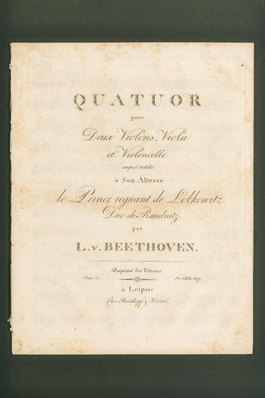
Beethoven-Haus Bonn, Collection Jean van der Spek C op. 74
The dedication reads: "Quartet for two violins, viola and violoncello, composed and dedicated to
His Highness the reigning Prince of Lobkowitz, Duke of Raudnitz by L. v. Beethoven."
While Beethoven believed that his scholarship provided him with a safe foundation to fully focus on his art and
be free from all material worries, reality was soon to teach him a lesson. The Napoleonic Wars devoured large
sums of money. Just like during the Seven Years' War a decision was made to increase the amount of Banco-Zettel.
The total circulation of bills rose from 74 million in 1797 to 1,061 million in 1811. The gap between the
Banco-Zettel and the silver coins once intended for their coverage had already broadened so much that the notes
could no longer be exchanged into metal money. Consequently, the Banco-Zettel continued to lose its buying
power and led to a general price rise and impoverishment of large population classes.
Upon signing the agreement in the spring of 1809, Beethoven's annual salary of 4,000 florins in Banco-Zettel was
equal to 1,620 florins in Convention currency (silver currency) – the salary of 600 ducats for the position at the
Kassel court would have equalled 2,700 florins Convention currency. By August 1810, it only equalled 890 florins,
in December, at the lowest exchange rate, only 416 florins.
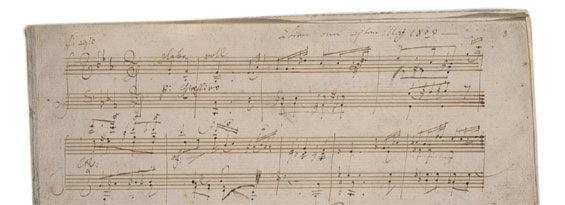
Archives of the Gesellschaft der Musikfreunde in Wien
Finally, the Austrian government realised that a national bankruptcy was inevitable and followed the advice of
Court Chamber President Count Wallis. In 1811 all Banco-Zettel was devalued. According to the decree of
Emperor Franz I from 20 February 1811, soon called "Bankrottpatent", all circulating Banco-Zettel was to be
devalued to a fifth of its face value from 15 March on and changed into "redemption coupons" for the new
"Vienna currency" (W.W.) until 31 January 1812.
In order to reduce the loss of agreements under private law such as annuities, pensions etc. until the decree
came into force the new value of these payments was calculated using the Banco-Zettel exchange rate valid when
the agreement was signed. For this purpose, a table was developed. The value for March 1809 was 248, so the
amount determined at the closing of the contract equalled the sum to be paid multiplied by 2.48.
Beethoven's work scholarship granted by Prince Lobkowitz, Prince Kinsky and Archduke Rudolph
Payout problems I
Beethoven now tried to convince his patrons to ignore the table and pay him the respective sum not in Banco-Zettel but redemption coupons. Although according to Beethoven's assurance initially all three patrons gave their consent, only Archduke Rudolph granted Beethoven the full amount.
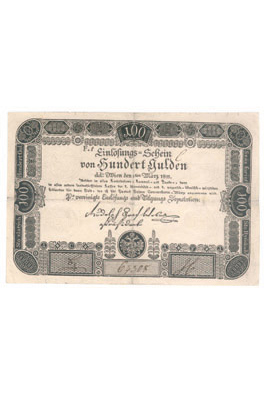
Austrian National Bank
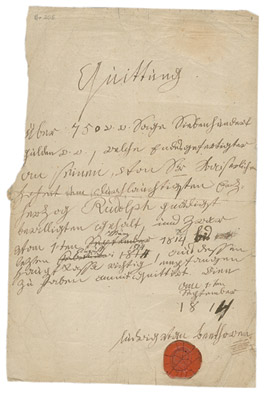
Beethoven-Haus Bonn, Collection H. C. Bodmer, HCB Br 205
"Receipt
For 750 fl. Vienna currency, in words seven hundred and fifty, that the signatory received from
his Imperial Highness, Archduke Rudolph, from the main cash office as part of his generous
salary from March 1st until the end of August 1814.
Vienna, September 1st, 1814.
Ludwig van Beethoven"
Due to the aggravated economic conditions Prince Lobkowitz had become highly indebted. His payments to Beethoven stopped in September 1811. On 1 June 1813, his assets were put under "amicable administration", half a year later under state administration. The Prince lost the right to dispose of his property and belongings, had to dissolve his band and leave Vienna.
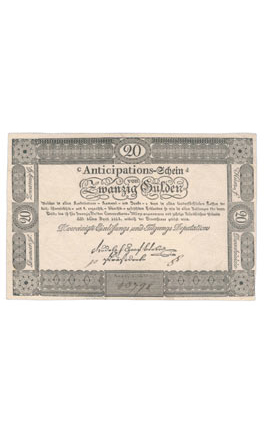
Anticipation coupon worth 20 fl., Vienna currency, 16 April 1813
Shortly after the Banco-Zettel had been exchanged for Vienna currency, the war expenses required more paper money to be issued. Because the increase of redemption coupons was forbidden by a decree, the transaction was called an advance for taxes and the new money became known as anticipation coupons.
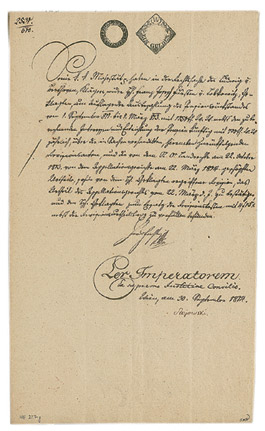

Beethoven-Haus Bonn, NE 227g
"Regarding the legal matter of Ludwig van Beethoven, plaintiff, against Franz Joseph Prince von
Lobkowitz, defendant, about the annuity remainder from September 1st, [1]811 until March 1st,
[1]813 worth 1050 fl. Vienna currency and the interest thereof to be paid and for the future
annuity of 700 fl. Vienna currency per year His Imperial Highness – after considering the
appeal's scripts and judgments of the Lower Austrian country rights from October 22nd, 1813 and
Appellate Court from March 22nd, 1814 as well as the appeal sought for by the defendant -, has
decided to confirm the dictum of the Appellate Court from March 22nd of the current year and
considers the defendant to pay for the appeal's cost and appeal's tax thereof.
[Signature illegible]
Per Imperatorem.
Ex supremo Justitio Consilio.
Vienna, September 30th, 1814.
Stojowski [other handwriting]"
In light of an imminent bankruptcy Beethoven filed a complaint against Prince Lobkowitz at the Lower Austria County Court that was allowed at first instance. On 22 October 1813, Lobkowitz was sentenced to pay the due as well as the future pensions in full face value of the Vienna currency. The opposing party then filed an appeal at the Appellate Court of Lower Austria and on 22 March 1814, Prince Lobkowitz was given the opportunity to rebut Beethoven's proof – a verbal promise of the Prince – by taking an oath. As part of his appeal Lobkowitz contacted the Emperor who, however, confirmed the decision of the Appellate Court. Because Lobkowitz refused to take an oath at court, the original verdict came into force on 19 April 1815, and Beethoven received the due sum in three instalments until the end of August of the same year.
Beethoven's work scholarship granted by Prince Lobkowitz, Prince Kinsky and Archduke Rudolph
Payout problems II
Not only for the payments from Lobkowitz did the composer have to ask the court for help but also for the
payments from Prince Kinsky. Although Kinsky had ordered his cash office in January 1812 – and therefore before
Beethoven asked him to ignore the table – to pay out Beethoven's salary using the table, the payments were
delayed for quite a while. On 2 November 1812, Kinsky died after an equestrian accident. Beethoven now asked
Princess Karoline Kinsky for a payment of the due sums in redemption coupons. The princess, unfortunately, was
not able to make a decision without the consent of the guardianship authority. Eventually, Kinsky's share was
determined at 1,200 florins Vienna currency from the Prince's death day onwards by the court.
The receipt refers to the first payment after the court's decision. The scholarship was to be paid in two
instalments of 600 florins each. On a form, Beethoven had to issue a receipt that – apart from seal and his
signature – also had to contain a certificate that the recipient of the payments was a living person (issued
by a rectory serving as a registry office).
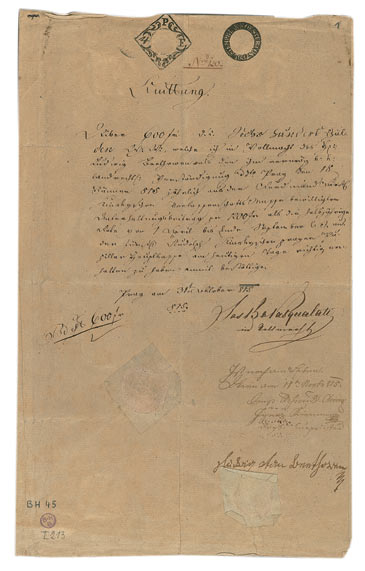
Receipt for Prince Kinsky's main cash office, Prague, 31 October 1815
"Receipt
For 600 fl. Vienna currency, in words six hundred, which I per procurationem of Ludwig van
Beethoven received today as the half-year instalment from April 1st until end of September of
the allowed annual salary of 1200 fl. in accordance with the dictum from Prague, January 18th,
1815, from the inheritance of Prince Kinsky.
Prague, October 31st, [1]815
Joseph v Pasqualati
per procurationem"
Kinsky's payments were often delayed. In order to accelerate the process, Beethoven authorised his lawyer
Nepomuk Kanka who had represented him during the trial.
At first the Prague bank Ballabene was to implement the payout but Beethoven informed Kanka in a letter that
Pasqualati had just told him after one month and six days that Ballabene was too influential for this matter and
that he would now have to draw on his lawyer to obtain his receivables.
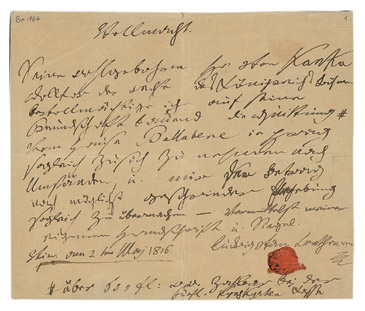
Power of attorney for Johann Nepomuk Kanka in Prague, Vienna, 2 May 1816
"Hereby, I authorise Mister von Kanka, doctor of law of the Kingdom of Bohemia to receive the
receipt for 600 fl. Vienna currency, payable from Prince Kinsky's cash office, by the Ballabene
House in Prague and swiftly carry the amount over to me. – By my own handwriting and seal.
Vienna, 2 May 1816, Ludwig van Beethoven"
On 1 May 1816, Beethoven also wrote Kanka about his intention to dedicate a composition to Princess Kinsky and ask for the payments he was entitled to in a letter. Such a letter does not exist and therefore might never have been written. After the tedious negotiations regarding his salary, the composer should have known that any new try would also fail. Thus, he gave the composition the self-explanatory title "To Hope".

Original edition of the song for singing voice and piano op. 94, published in Vienna in 1816 by Steiner & Comp.
The title reads: "To Hope, from Tiedge's Urania, set to music for one singing voice and piano forte and dedicated to Princess Kinsky, born Countess of Kerpen, by Ludwig van Beethoven."
Cost of living in Vienna at Beethoven's time
Composition and demand
Living conditions in Vienna at Beethoven's time were far different from today and thus cannot be compared directly. To get an objective picture, Beethoven needs to be seen within his time. The then cost of living mainly comprised expenses for food, rent and clothing. In his "New Sketch of Vienna" from 1804 contemporary Johann Pezzl concluded that the minimal expenses for a man living by himself, without any splendour or posh public office and only socialising with the middle classes amounted to 967 florins. However, if one includes theatre visits now and then and other public or private amusement, less than 1,200 florins a year are not sufficient. To be able to compare this information with today, such "amusement expenses" will have to be included. But even then 41% were still spent on food (without taking any spare time activities into account this was 52%) while modern society spends only a fifth on food. Clothing, with 19%, was significantly more expensive than today (6%), too. Unlike then we now spend more money on rent and additional costs (37% today versus 14% back then). If calculating the budget for 1809 and taking into consideration the price development for food and rent, a total of 1,600 florins results. The financial support Beethoven initially obtained from his patrons was thus more than twice the budget a middle-class man disposed of. In the most extreme years of 1816 and 1817, the composer's salary of 3,400 florins was even below Pezzl's budget of about 3,750 florins.
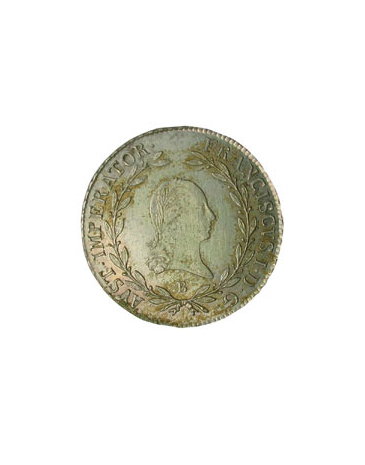

Austrian National Bank
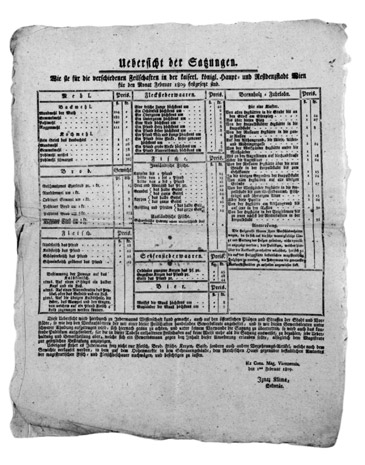

Library of the Gesellschaft der Musikfreunde in Wien
Pezzl's list shows why food prices were so significant. While contemporary documents of Beethoven's early Vienna
years already indicate a noticeable price increase for food, the situation worsened during the occupation of
Vienna by French troops in May 1809 and finally led to bottlenecks in supply. In the second half of the year
food prices rose by 50%. Prices for flour, bread, meat, fish, candles, soap, beer and firewood were fixed by
the government. When even these were raised, life became more and more difficult. In February a pound of beef
cost 18, in September already 27 kreuzers. All other prices were adapted to the market situation and hardly
affordable for the broad population.
Beethoven reports the same. To explain why he insisted on receiving his remuneration for a composition in
Convention coins, he wrote publisher Breitkopf & Härtel from Leipzig that a pair of boots now cost 30
florins, a
coat between 60 and 70 florins and that due to the French occupation his annual salary of 4,000 florins had lost
its value and was not even worth 1,000 florins in Convention coins. In 1792 Beethoven noted 6 florins for a pair
of boots, in 1810 they cost 30 florins – a five-fold price increase.
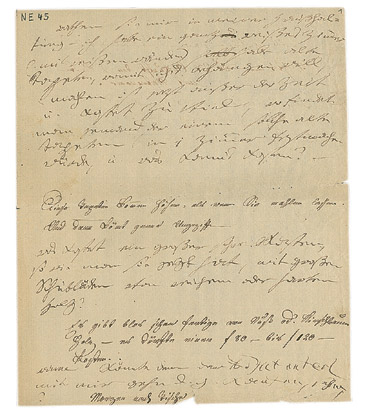
Written dialogue between Beethoven and Tobias Haslinger regarding household matters, around 1816–17
"[Beethoven:] Advise me on my housekeeping. I have a room with white walls and some old wall
paper I wish to put up. There is not enough time for painting, let alone money. Where do I find
someone who can put wallpaper in one room and how much will it cost?-
[Haslinger:] The wallpaper is more expensive than painting. And then vermin will likely come.
[Beethoven:] How much is one of these large desks now in fashion, with large drawers made from
soft or hard wood?
[Haslinger:] There are ones from walnut or cherry wood for a price of fl. 80 – 120.
[Beethoven:] When would the fine adjutant [Haslinger himself] accompany me and buy and see such
things?
[Haslinger:] Tomorrow after lunch.
[?]"
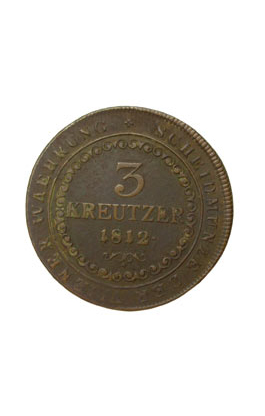
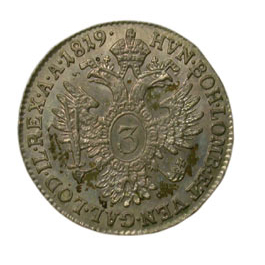
3 kreuzer Vienna currency – Austrian Empire, Franz I, 1812, back
Besides the bills of the Vienna currency, billon copper coins with a value of 3, 1, ½ and ¼ kreuzer were introduced.
Even though the increase of food prices was far quicker and more irregular than that of rents, these were also
subject to inflation and price rise. In 1816, Beethoven paid a rent to Count Lamberti that was ten times higher
(1,100 florins in Vienna currency equal 5,500 florins in Banco-Zettel) than the rent he paid six years earlier
at the Pasqualati house (500 florins, Banco-Zettel).
The extensive correspondence with Nannette Streicher, owner and the driving force of a leading Vienna piano
manufactory shows that Beethoven often sought advice in household matters.
Music publisher Tobias Haslinger, a friend of Beethoven, helped him move from his summer residence to his town
residence in October 1817. It might be possible that Beethoven asked for advice on wallpaper and chest of
drawers on this occasion.
Cost of living in Vienna at Beethoven's time
Food expenses
After two preceding bad harvests, the extreme inflation and price rise reached a second peak in 1817. Many food prices had doubled or even tripled. In addition, the Vienna Congress had engulfed enormous amounts. So it is not surprising that Beethoven told Johann Peter Salomon in June 1815 he was afraid of losing his salary again. At that time, 100 florins Convention coins equalled 400 florins and 50 kreuzers Vienna currency. Only around 1820 the rate stabilised at 100:250.
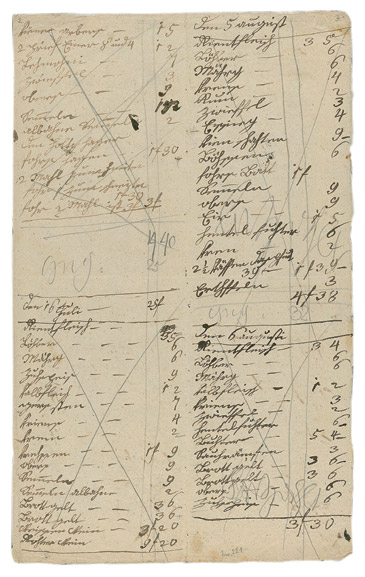
Entries in the household book dated 15 and 16 July and 5 and 6 August 1825
Entries by the housekeeper are made in ink, Beethoven's additions are in pencil
"[July 15th, second part]
Green peas .....15
2 letters, one 8 and 4 .....12
Lime .....7
Onion .....3
Cream .....9
Rolls .....12
Old rolls .....2
Woodchopper
for chopping.....1 f 30
Tailor, two times
Tailor, one time l f 3o
Tailor, second time 3 f .....3 f
[Beethoven:] 14 40
[Beethoven:] Given 25
[Housekeeper:] July 16th. ... 25 f
Beef .....35
Liver .....6
Marrow .....6
Side dish .....9
Veal .....12
Barley .....7
Vegetables .....4
Horseradish .....2
Krehssen [Krause] .....1 f 9
Cream .....9
Rolls .....9
Old rolls .....2
Bread .....36
Bread .....36
White wine .....3 f 20
Red wine .....9 f 20
[Housekeeper:] August 5th
Beef .....35
Liver .....6
Marrow .....6
Vegetables .....4
Cream .....2
Onion .....3
Vinegar.....4
Pine log .....9
Broom .....6
For the bathroom .....1 f
Rolls .....9
Cream .....9
Eggs .....15
Chicken food .....6
Horseradish .....2
2 1/2 coffee per pound
39 1 f 39
Potatoes.....3
4 f 38
[Beethoven:] Given 32
[Housekeeper:] August 6th
Beef .....34
Liver .....6
Marrow .....6
Veal .....12
Vegetables .....3
Onion .....2
Chicken food .....6
Butter .....54
Sorrel.....3
Bread .....36
Bread .....36
Cream ......6
Side dish .....6
3 f 3o"
Austrian National Bank
Austrian National Bank
Because of the financial distress and his distrust that increased with his deafness, Beethoven forced his housekeepers to record their expenses in household books. All purchased items as well as their price had to be written down. Beethoven reviewed the entries, noted down how much money he had given his housekeeper and how much she had returned and finally crossed out the entire page to show it had been reviewed.
Cost of living in Vienna at Beethoven's time
Piano prices
Expenses for the nephew
The price list shown here indicates the prices for pianos by Anton Moser who was not among the first but belonged
to the solid and most affordable piano manufacturers in Vienna. The different prices ranging between 40 and 80
ducats depended on the veneer used and sound range of the instrument. Cherry wood was the cheapest, mahogany the
most expensive material. The sound range was either five octaves plus second or five and a half octaves. Other
renowned piano makers charged 100 ducats for grand pianos with mahogany veneer and bronze fittings, Nannette
Streicher sold her plain pianos for at least 66 ducats. In the mid-1820s, her plain pianos made from walnut in
the form of a grand piano and with a sound range of six octaves cost around 80 ducats whereas mahogany pianos
with lavish fittings and six and a half octaves started at 165 ducats. Other piano manufacturers offered rather
plain square pianos for only 33 ducats.
Once in a while Beethoven acted as an "instrument agent and advisor". It seems that he himself never had to buy
one. As a famous piano player and composer, he was able to resort to loans and presents of renowned piano makers
who thus achieved their intended advertising effect.
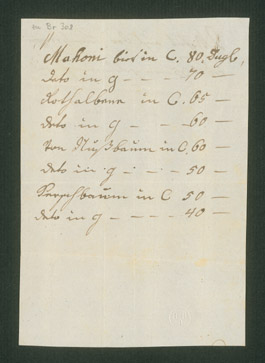
Beethoven-Haus Bonn, Collection H. C. Bodmer, HCB Br 308 and 62

Ducat – Austrian Empire, Franz I, 1810
Because the Convention currency introduced in 1753 was a silver currency, the rate of the gold ducat to the silver coins was not fixed. Between 1780 and 1858 the rate stabilised at 4.5 florins Convention currency.
After his brother Kaspar Karl died in November 1815, Beethoven obtained custody of his nephew Karl. On 10 May 1817, Beethoven and his sister-in-law Johanna settled their dispute regarding Karl's inheritance. They agreed that Johanna would contribute half of her widow's pension to the education of her son who would receive another 2,000 florins Vienna currency from his father's inheritance. Johanna kept the house 121 in the Alservorstadt suburb. Because the relationship between the composer and his sister-in-law was quite taut, Beethoven always tried to exclude Johanna from custody of her son. A tedious legal dispute followed that lasted until 1820.
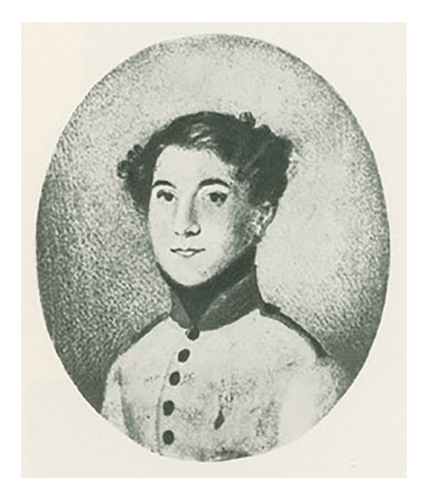
Beethoven-Haus Bonn

Beethoven-Haus Bonn, Collection H. C. Bodmer, HCB BBr 122
At first, Karl attended a number of different schools, among them the institute of Cajetan Giannattasio del Rio. School fees amounted to 275 florins Vienna currency per quarter. In a letter to Ferdinand Ries who wanted to arrange a charity concert for him, Beethoven wrote on 8 May 1816, that his salary of 3,400 florins in paper money was hardly enough to cover his expenses such as a rent of 1,100 florins, 900 florins for the housekeeper and up to 1,100 florins for school fees and that he planned to put up his little nephew as the school was not good. He also complained about how much one would have to earn to be able to make ends meet. Later, Karl lived with Beethoven and attended the University of Vienna before he switched to the Vienna Polytechnical Institute in 1825. Eventually, Karl opted for a military career.
Beethoven and his publishers
His sales strategies
The remunerations Beethoven received from his publishers were by far his most important source of income. His
increasing deafness deprived him of another significant income source, namely performances as a musician. Thus,
he became a skilful negotiator. As a composer, Beethoven wanted to remain free and independent and create
timeless compositions for a worldwide audience. Ordered works were the exception; however, he offered noble
patrons an exclusive right to use important pieces for a period of six to twelve months in exchange for payment
before these compositions went to press. Thereafter the piece was offered to several competing publishers. Fixed
one-time remunerations were set that also included the right to adapt the piece for smaller instrumentations.
Apart from this, Beethoven received no additional payment. Reprints or copies of unprinted or printed works
distributed by professional scribe offices did not bring him any earnings.
The publishers certainly gained quite some money with composers who received far smaller payments for their
works but still had a broad target group in mind. To publish a Beethoven composition, however, also made the
publisher's reputation rise. In addition, Beethoven's music enjoyed a certain constancy thus allowing large
numbers of later new editions. And so it proved worthwhile even though the composer's remuneration often
exceeded half of the total cost for a printed edition.
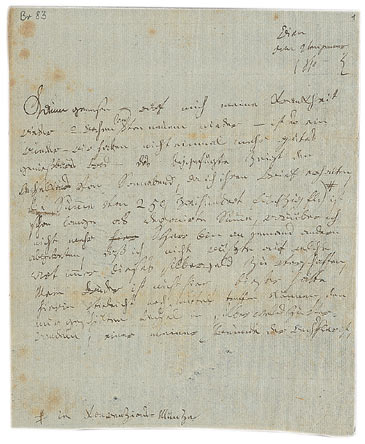
Beethoven to Breitkopf & Härtel in Leipzig, Vienna, 2 January 1810
"Barely had I recovered when the illness brought me down again for two weeks – not surprising as we are even out of edible bread – the enclosed shows Saturday's exchange rate when I received your letter. The sum of 250 fl. (two hundred and fifty) in Convention coins has long ago been carried over to someone else as deposit of which I cannot dispose. My brother is away, the one who might have been of help in this matter to exchange the bill sent to me into silver money. I recounted the case to one of my acquaintances, a money changer, and he said I was only to return the bill back to you as the rate would change anytime and a rise in silver coins was to be expected. Thus, I ask you, as agreed, to pay out the 250 fl. in Convention coins here at Mr. Kunz and Company since I have long ago given it to someone else and am obliged to pay it back in silver coins. I shall be grateful for your quick favour as the other has long been in wait and I have long believed to compose quicker. But today, I am too weak to respond more to your agreeable letter."
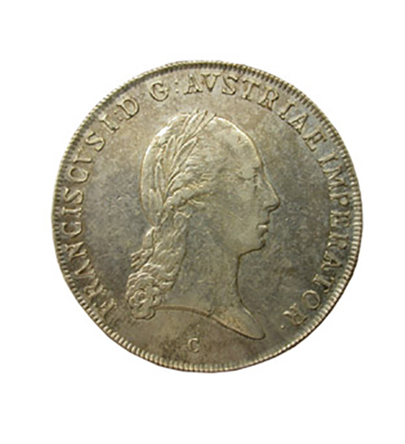
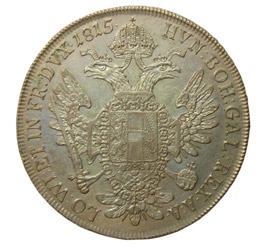 Austrian National Bank
The Convention thaler consisted of 120 kreuzers. Usually, the florin (half thaler, 60 kreuzers) was used for calculation.
In 1809 Beethoven sold a collection of works to his preferred Leipzig music publishing house Breitkopf & Härtel, comprising the oratorio "Christ on the Mount of Olives", op. 85, the opera "Leonore", op. 72 and the Mass in C major, op. 86, for a total fee of 250 florins Convention currency. As opposed to the agreement, the remuneration was paid in Banco-Zettel that lost its value from day to day. Therefore, Beethoven demanded the Banco-Zettel to be taken back and the full amount be paid out in silver currency. A few months later, Beethoven asked for 250 ducats for another grand collection of compositions (opp. 74 to 86). When the publisher tried to talk him down to 200 ducats, Beethoven reacted with these words: "It is not my intention, as you believe, to become a profiteer in art, one who only composes to augment his riches, heaven forbid, but I enjoy an independent life and cannot be without a small fortune and so the composer's remuneration must honour the artist and all he undertakes. I shall not mention it to anyone that Breitkopf & Härtl gave me 200 ducats for these compositions, you as a music publisher more humane and educated than all other publishers should have the intention not to pay the artist a scanty remuneration but enable him to fully administrate the duties expected of him -".

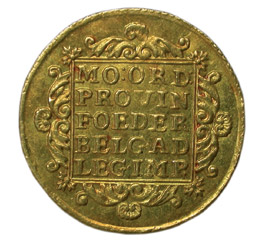
Austrian National Bank
The appearance of these coins remained almost the same throughout the 18th and 19th centuries.
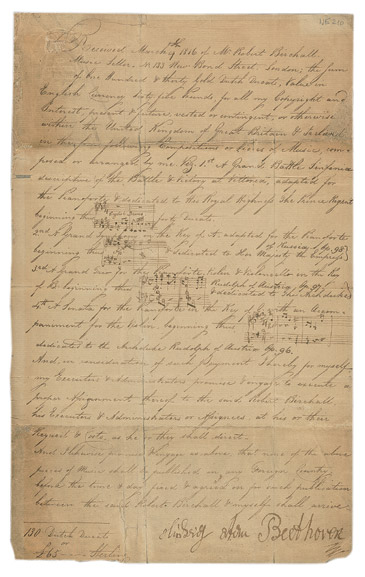
Certificate of ownership and receipt for publisher Robert Birchall in London, Vienna, 9 March 1816
"Received March 9th 1816 of Mr. Robert Birchall. Music Seller. No. 133 New Bond Street. London;
the sum of One Hundred & thirty Gold Dutch Ducats, Value in English Currency Sixty-five
Pounds, for all my Copyright and Interest, present & future vested or contingent, or
otherwise within the United Kingdom of Great Britain & Ireland in the four following
Compositions or Pieces of Music, composed or arranged by me. Viz. 1st A Grand Battle Sinfonia
descriptive of the Battle & Victory at Vittoria, adapted for the Pianoforte & dedicated
to His Royal Highness The Prince Regent beginning thus [Incipit follows] forty Ducats.
2.nd A Grand Symphony in the Key of A, adapted for the Pianoforte beginning thus [Incipit
follows] & dedicated to Her Majesty the Empress of Russia Op. 98
3.rd A Grand Trio for the Pianoforte, Violin & Violoncello in the Key of B. beginning thus
[Incipit follows] & dedicated to the Archduke Rudolph of Austria Op. 97
4.th A Sonata for the Pianoforte in the Key of G with an Accompaniment for the Violin, beginning
thus [Incipit follows] dedicated to the Archduke Rudolph of Austria Op. 96.
And, in consideration of such Payment I hereby for myself, my Executors & Administrators
promise & engage to execute a proper Assigenment therof to the said Robert Birchall, his
Executors & Administrators or Assignees, at his or their Request & Costs, as he or they
shall direct.
And I likewise promise & engage as above that none of the above pieces of Music shall be
published in any Foreign Country, before the time & day fixed and agreed on for such
publication between the said Robert Birchall & myself shall arrive
Ludwig van Beethoven mp
130 Dutch Ducats or £ 65 -"-" Sterling"
Beethoven offered his compositions to several publishers for various European markets under the condition that the editions would have to be published at the same time to avoid losses for individual publishers. The markets were distinctly separated between Austria and politically fragmented Germany (including Leipzig, Bonn, Berlin and Mainz) as well as France and Britain. For a fee of 130 Dutch ducats he conceded the rights of property and publication in Britain and Ireland for the piano reductions of the battle symphony "Wellington's Victory or the Battle of Vittoria", op. 91, and of the Seventh Symphony, op. 92, the piano trio op. 97 and the violin sonata op. 96 to the London publisher Robert Birchall. Publisher Steiner from Vienna thus had to delay his edition of the battle symphony's piano reduction slightly – one of the few compositions highly targeted to public acceptance.
Beethoven and his publishers
The "Missa Solemnis" case
It was the Missa Solemnis, his greatest spiritual music composition and his best work in his own eyes, for which Beethoven undertook the most complicated and dubious sales efforts ever.
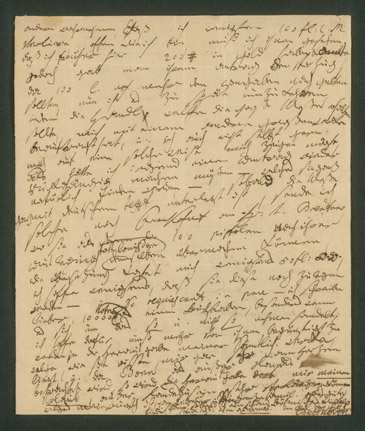
Beethoven to Nikolaus Simrock in Bonn, Vienna, 28 November 1820
"At that time your letter arrived, once here, once there, I was delayed in reading it and unaware of commercial matters, I waited for my friend who has not come here yet and then I learned through others that I will lose at least 100 fl. in Convention coins. Frank as I am, I have to confess to you that in the past I was able to receive 200 # in gold but your application was preferred, as 100 l.[ouis d'or] are more in accordance with the statements. Now it is too late to turn back because the occasion that the mass was intended for has now ordered me to compose another piece and I am not in favour of showing that I had to undo an offer – which you will find quite normal. Once the mass has been given a German text, I will send these to Frankfurt to Mr. Brentano to whom you can then bring the 100 pistoles at your wish instead of Louis d'or. The translation will cost me at least 50 fl. Vienna currency. I hope that at least you will add these. So rest in peace – I would rather write 10,000 notes than one letter, especially when it is about taking and not taking and hope much more for your favour for publishing all my works which are dear to my heart as you know."
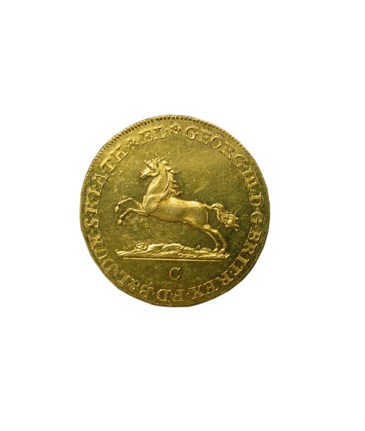

Austrian National Bank
From the end of the 18th to the second third of the 19th century the pistole was the main gold
coin in Germany. Usually called five-thaler coin, the coins were also named after the ruler
such as Friedrich d'or or Georg d'or.
In February 1820, one month before the enthronement of his pupil Archduke Rudolph as Archbishop of Olmütz – the occasion the mass was composed for – but almost three years before its completion, Beethoven and his former Bonn friend Nikolaus Simrock agreed on a fee of 100 Louis d'or coins. Despite Simrock's announcement to equate the value of the Louis d'or coin with the Friedrich d'or coin (pistole) (worth only 7.5 florins Convention coins), Beethoven felt taken in as he calculated with 9 florins. He had received an advance payment for the fee of 900 florins Convention coins from his friend Franz Brentano who he was able to repay in two instalments after three years. Beethoven then opened negotiations with publishers Peters in Leipzig and Artaria in Vienna and several others. In the end, the mass was sold in 1824 for 1,000 florins Convention coins to the Schott publishing house in Mainz together with the Ninth Symphony that alone brought 600 florins.
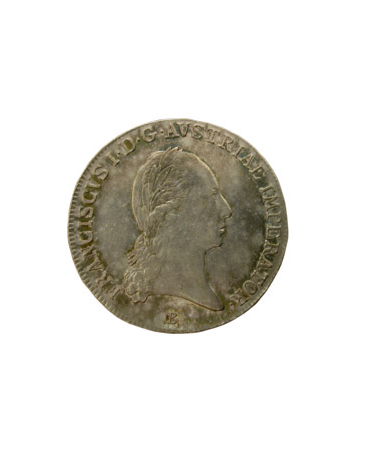
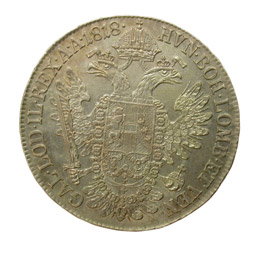
Austrian National Bank
The Convention thaler consisted of 120 kreuzers. Usually, the florin (half thaler, 60 kreuzers)
was used for calculation.
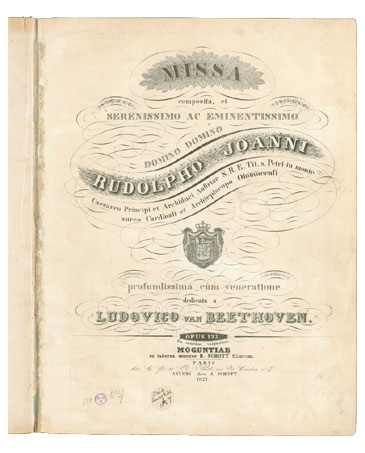
Beethoven-Haus Bonn, C 123/1
Before it went to press, Beethoven offered copies of the Missa Solemnis made by his own scribes to 28 European courts for a fee of 50 ducats each. He received ten orders that brought him an additional gain of 1,650 florins Convention coins.
Beethoven as concert organiser
As it was customary for that time, Beethoven also organised concerts. Concerts for the benefit of a musician or
composer, the so-called "Academies", always came with a high financial risk. Usually, the composer whose latest
works were played or the virtuoso who wished to demonstrate his ability to the audience, served as the organiser
himself which led to an additional workload often regarded as cumbersome and particularly tedious. The
organiser's duties included the creation of the programme, selection of musicians, announcing the event as well
as arranging advance bookings. Apart from that a suitable place had to be found – usually a theatre or
multi-purpose hall such as the Redouten Hall – and rented. The first public hall used only for concerts was
built no earlier than 1831 by the Society of the Friends of Music, founded in 1812.
Beethoven managed to secure the National Court Theatre next to the Hofburg for his first own Academy on April
2nd, 1800. The fact that he had dedicated his piano sonatas op. 14 to Josephine von Braun, wife of the director
of both court theatres, one year earlier certainly helped him. The programme featured a symphony by Mozart, two
pieces from Haydn's Creation, a piano concerto by Beethoven (probably number 1, op. 15), his Septet op. 20 and
the First Symphony op. 21 as well as a free piano fantasy. Such long, mixed programmes where the instrumental
compositions were interrupted by short vocal pieces were quite usual. Financially seen, the concert was
probably successful although Beethoven did not follow the conventions and only charged an entrance fee "as
usual".
The upbeat mood he expressed in a letter to his boyhood friend Franz Gerhard Wegeler regarding his future
in Vienna in June 1801 and his hope to hold an Academy at the theatre each year speaks for a successful
concert. However, the remaining 26 years in Vienna would see only eight concerts for Beethoven's benefit of
which only four proved financially successful. But these Academy concerts always represented an occasion for
quite generous contributions made by the nobility.
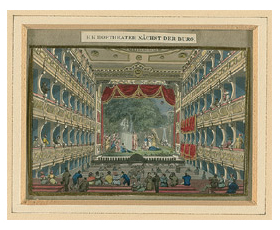
Interior view of the Hofburg Theatre in Vienna, around 1825 Anonymous engraving, published by Tranquillo Mollo
The largest and most renowned Vienna theatre accommodated up to 1,800 people. The concerts of the Orchestra Society founded in 1771 were held four times a year (two around Advent and another two before Easter) for the benefit of widows and orphans of the society members.

Placard for the Academy concert on 2 April 1800, Beethoven-Haus Bonn
The best-known examples are the concerts that Beethoven held during the Vienna Congress. Between September 1814 and June 1815 the leading European regents convened in Vienna. Their entourage included diplomats and aristocrats. An extensive programme with balls, opera performances and concerts was organised. After the success of "Wellington's Victory or the Battle of Vittoria", op. 91, that hit the patriotic nerve of that time, Beethoven seized the opportunity once more and swiftly composed the grandiose cantata "The Glorious Moment", op. 136, following only commercial aspects. On 29 November 1814, "Wellington's Victory" and the Seventh Symphony were performed once more together with the new cantata in front of an enthusiastic audience and the heads of state. The concert was repeated for Beethoven's benefit on 2 December and to the benefit of the St Marx hospital on 25 December. The expenses for the first two events amounted to 5,108 florins Vienna currency. The fact that Beethoven made more money through his concerts in 1814 than in all other years together is certainly due to the generous support of the Russian Tsarina. The Vienna magazine "Friedensblätter" from 24 December 1814, reported that she had given Beethoven a generous donation of 200 ducats.
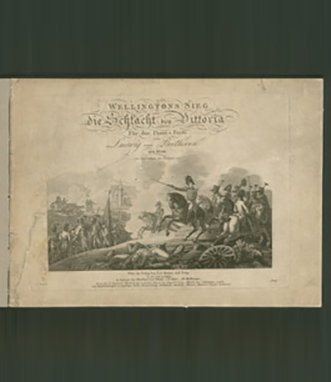
Beethoven-Haus Bonn, Collection H. C. Bodmer, HCB C op. 91

Luxury edition of the cantata op. 136, published in 1837 by Haslinger
Not until almost ten years after the composer's death was the work published in a never-seen luxury edition by Haslinger. Especially lavish dedication editions were made for the monarchs of Austria, Russia and Prussia and particularly wealthy customers. The edition shown here was dedicated to the Prussian king and contains one decorative title and five dedication sheets. At the same time an edition with a new and more general text was published under the title "Preis der Tonkunst" (Praise of Music) but without naming text poet Friedrich Rochlitz.
Dedications and ordered compositions
The polonaise op. 89, composed especially for the Tsarina, might have been a token of gratitude for her noble contribution to his Academies during the Vienna Congress. However, the composer also received 50 ducats as a gift for the dedication. She additionally paid him 100 ducats for the violin sonatas op. 30 published in 1803 and dedicated to her husband Alexander I. These are the only dedications that resulted in a payment for Beethoven even though the composer dedicated some more pieces with probably the same intention to others.

Original edition of the polonaise for piano in C major op. 89, published in 1815 by Mechetti
The dedication reads: "Polonaise for piano forte composed and dedicated to her Imperial Majesty Elisabetha Alexiewna, Empress of Russia, by Ludwig van Beethoven."
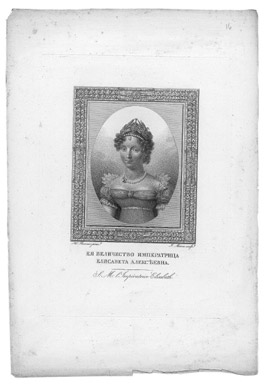
Tsarina of Russia, 1810
Copper engraving by André Joseph Mécou after a painting by Henri Benner
In 1793, Luise Marie, Princess of Baden, married the Russian Prince Alexander Pavlowitsch who became Emperor of Russia in 1801. After converting to the Greek church, she changed her name to Elisabeta Alexejewna.
When dedicating the battle symphony "Wellington's Victory" op. 91 to the Prince Regent of Britain, the later King George IV, Beethoven certainly hoped for a generous remuneration. Unfortunately, his hopes were in vain, despite numerous later tries to remind the king of this omission. The dedication of the Ninth Symphony op. 125 to the Prussian King Friedrich Wilhelm III did not fulfil Beethoven's intention either. While he had hoped for a medal, he simply received a ring of minor value and a plain thank-you note. Despite such disappointments, Beethoven profited from dedications as they enhanced the value of a composition in the public's eyes. Of course, he dedicated many pieces to his patrons as a token of gratitude. In general, dedicating a composition was not only a positive deed for the composer and enabled him to demonstrate his admiration in public but also for the recipients who felt adorned through "their" piece. The dedications to the composer's noble patrons outnumber those to his friends by far.
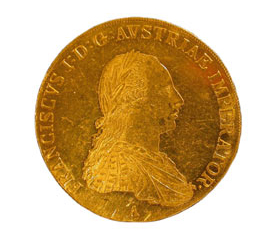

Original edition of the violin sonata in C minor op. 30 No. 2, published in 1803 by the Bureau des Arts et d'Industrie
The dedication reads: "Three sonatas for piano forte accompanied by violin, composed and dedicated to His Majesty Alexander I, Emperor of Russia, by Ludwig van Beethoven."
The few ordered works were composed for noble customers (string quartets opp. 127, 132 and 130 for Prince Galitzin, Mass op. 86 for Prince Nikolaus II Esterházy), music societies (Ninth Symphony for the London Royal Philharmonic Society), theatres (such as the incidental music opp. 113 and 117 for the theatre in Pest) and publishers (for example the adaptation of folk songs for the Scottish publisher George Thomson). With regard to the fee Beethoven charged, the order of the Society of the Friends of Music in Vienna to write an oratorio for Carl Bernard's text "Der Sieg des Kreuzes" (the victory of the cross) is most noteworthy. Despite an advance payment of 400 florins Vienna currency and a fixed remuneration of 300 ducats, Beethoven just outlined a short sketch. He did not like the libretto. This example is quite illustrative that it was art, not money, that reigned in his world.
Beethoven's financial circumstances
A publisher in lieu of a bank
Due to the difficult economic situation Beethoven was regularly confronted with financial shortcomings. When the
payments by his patrons virtually stopped for three years in 1811 and were resumed in 1815, the buying power had
changed drastically and could not be compared to that of 1809. Consequently, Beethoven's annuity, once fixed
with the intention of freeing him of all financial worries, temporarily did not fulfil its purpose. He
repeatedly had to ask publishers, friends such as the Brentanos and family like his brother Johann for loans.
When his brother Kaspar Karl fell ill with tuberculosis in 1813 Beethoven helped him with a loan. When the money
could not be paid back, he received the amount from his publisher Sigmund Anton Steiner and conceded him the
demand for payment. Beethoven pledged to provide Steiner with a new and unpublished piano sonata in case the
amounts would not be paid back when due and guaranteed him the exclusive right to buy several works. The
composer chose the piano sonata in E minor, op. 90 as a special means of paying his debts.
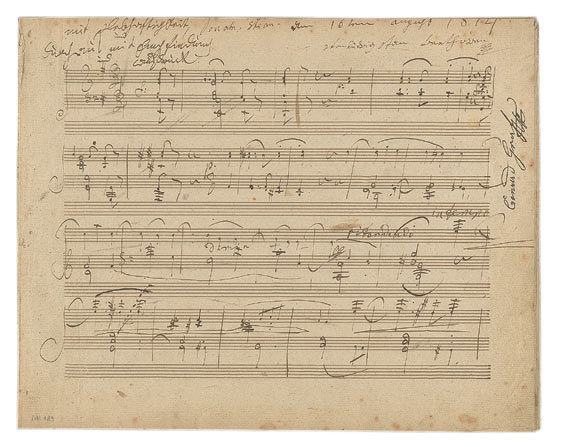
Autograph of the piano sonata in E minor op. 90, 1814
16 sheets, 28 pages of sheet music, ink, corrections in pencil and red chalk, approx. 9.8 by 12.1 inches, manuscript title: "Sonata, Vienna, on 16 August 1814, by Ludwig van Beethoven."
In the following years publisher Steiner repeatedly served as Beethoven's "private bank" and the composer took
up several loans and even successfully invested money. On 16 July 1816 he wrote Steiner to express his trust
and ask him to securely invest his small capital – a sum of 4,000 florins Convention coins with an interest rate
of 8%. The money's origin is not clear but it may well have been the earnings from the two Academy concerts
held in 1814 and the generous contribution from the Tsarina.
On 1 June 1816, the Privileged Austrian National Bank was founded as an independent incorporated company.
With the aim of a currency consolidation the paper money of the Vienna currency was withdrawn and changed into
new bank notes of the original Convention coins at a rate of 2.5 to 1. Around 1820 the currency had stabilised.
Now Beethoven's work scholarship was 1,360 florins which equalled the annual salary of a bandmaster. A musician
at the court band made between 400 and 700 florins, comparable more or less to the salary of a teacher at a
higher institute (they supplemented their income through lessons and private performances). Medium-level public
servants were paid more than 1,000 florins and Beethoven's housekeeper received 129 florins, full board and
lodging included.
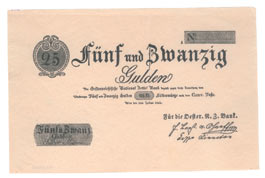
Austrian National Bank
In his tax return dated 15 January 1818, Beethoven indicated an income of only 1,500 florins Vienna currency that equalled the annuity share Archduke Rudolph paid. All other earnings from the sale of his compositions as well as the shares of Princes Kinsky and Lobkowitz were omitted. The class tax was a precursor to today's income tax and was levied from 1800 onwards. From 1802 on taxpayers had to classify themselves into tax classes according to their income and provide a declaration. Beethoven shortened the official wording drastically.
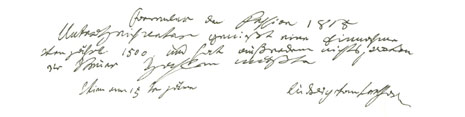
Beethoven's tax declaration from 15 January 1818
Beethoven's tax declaration reads:
"Form of the tax declaration 1818
The undersigned disposes of an annual income of 1,500 and apart from that nothing else he may
have to pay taxes for
Vienna, 15 January ludwig van Beethowen"
Contrary to Beethoven's declaration the official wording defined according to the tax patent
from 20 August 1806 reads:
"In relation to his income subject to class taxes of ..., including house interest, the
undersigned hereby declares himself (under noble or priestly loyalty and on oath) to belong to
tax class ... and agrees to pay taxes in the amount of ...florins, kreuzers."
Beethoven's financial circumstances
Notes and needs
After three years Beethoven asked Steiner for a return of his invested capital – Steiner did not subtract the composer's debts – and bought eight bank shares of the Austrian National Bank on 13 July 1819. When Beethoven did not make the stipulated repayments, Steiner reminded him politely but with emphasis at the end of 1820. Obviously, Beethoven had bitterly complained about the previously set interest rate of 6%, which was even less than the fixed interest rate for his capital investment. "I cannot be content with your conclusion on my bill as I charged you 6% interest on lent money while giving you 8% on the money you invested and paid these and your capital in a timely manner. What's sauce for the goose is sauce for the gander. I am not able to offer loans without interest. I served you as a friend in need, trusted your word, have neither been intrusive nor bothered you and must so reject the reproaches thrown at me. – If you consider that my loan to you now nears its fifth year, you will see that I was anything but an intrusive creditor. Even now, I would spare you and be more patient if I were not in need of money. – If I were less convinced about your help and word, I would offer you more time despite the hardship on me. 17 months ago I returned 4000 florins Convention coin or 10000 florins Vienna currency as capital and did not subtract my outstanding money, so it now seems double the pain to be in need of money after trusting your word and despite my good will. Each knows best where the shoe pinches and so I conjure you not to let me down and find means to pay my bill as quickly as possible.-"

Beethoven-Haus Bonn, Collection H. C. Bodmer, HCB Br 284
Beethoven noted down his thoughts on origin and composition of the debt that amounted to 2,420 florins Vienna
currency:
"1300 fl. were probably taken up in 1816 or 17; – 750 fl. Vienna currency even later, perhaps 1819; – 300 fl. I
took
up for Mrs. v. Beethoven a few years ago; – 70 fl. were probably paid for me in 1819 too."
The first item is the loan Beethoven received on 4 May 1816, the second one the loan from 30 October 1819.
The
amount of 70 fl. might be identical to 72 fl. Steiner paid to Bernard in August of 1816 on Beethoven's behalf.
The
last amount of 300 fl. was owed by Johanna van Beethoven in 1818. On 8 January 1824, Beethoven told her in a
letter that he had amortised the debt.
Regarding debt amortisation, Beethoven wrote the following:
"Aside: For payment 1200 fl. can be authorised annually in two instalments. -"
All in all, Steiner had added an interest amount of 520 fl. Vienna currency (1,200 fl. Convention coins equal
3,000
fl. Vienna currency). In the end, Steiner had to wait until the summer of 1824 until he received the repayment
of
all loans.
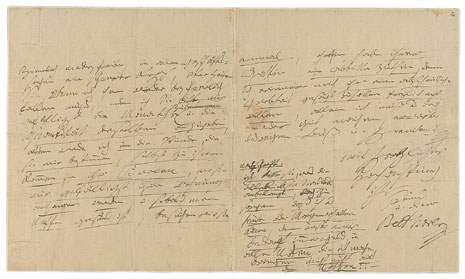
Beethoven-Haus Bonn, Collection H. C. Bodmer, HCB BBr 49
In 1823, Beethoven sent a letter to Franz Salzmann, then chief accountant at the Privileged Austrian National Bank in Vienna. The composer owed 100 fl. to his tailor who had already threatened to file a complaint. In addition, Beethoven wanted to pay back at least a part of the money Franz Brentano had lent him three years ago as advance payment of the expected remuneration for the Missa Solemnis. Before borrowing against his shares again, he wanted to receive the due dividend. Therefore, he informed Salzmann: "I am in need of your help again as I can only write down some music. Excuse the inconvenience of asking you to name the months and quantity." And postscript: "With regard to the wonderful dividend, I am asking you to arrange for it to be paid today or tomorrow as one like me always is in need of money and all these musical notes don't pay my needs!!"
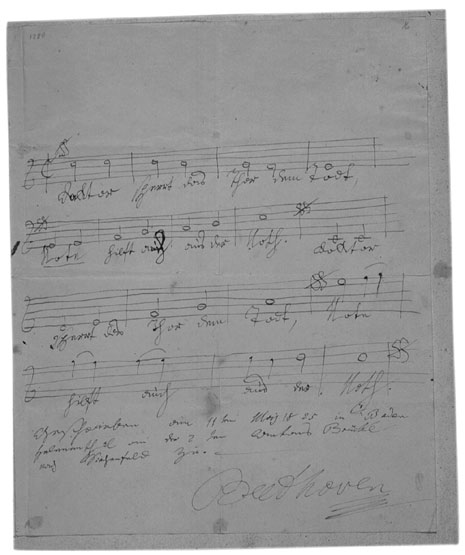
Archives of the Gesellschaft der Musikfreunde in Wien
The pun of the German words "Note" (musical note) and "Not" (distress, hardship) was often used by Beethoven, for example in the canon he sent to his doctor Anton Braunhofer in May 1825 after his convalescence: "Doktor, sperrt das Tor dem Tod – Note hilft auch aus der Not" (Doctor, shut out death – notes save from distress). Braunhofer had asked Beethoven for "a few insignificant notes"; he mainly wanted something handwritten from Beethoven. In this case, the German word "Not" (hardship, distress) obtains a double meaning: On the one hand composing musical notes ("Note") helps Beethoven out of his financial distress ("Not"), on the other hand it also eases his psychological distress caused by the prolonged sickness.
Beethoven's financial circumstances
His shares

Share of the Privileged Austrian National Bank, issued to Ludwig van Beethoven on 13 July 1819
Among the early shareholders of the Austrian National Bank were many other famous persons such as poet Johann Wolfgang von Goethe and Archduke Johann.
Beethoven repeatedly used his shares as security for loans, he borrowed against them and later amortised them.
Furthermore, he received an annual dividend of 30 fl. Convention coins, paid twice a year in January and July.
He
obtained an additional payout of the bank's gains in the form of an exceptional dividend after the annual
balance of
accounts in January. The capital gain was immense: Between 1819 and 1825, the price for one share more than
doubled
from 500 fl. to 1,202 fl. Because Beethoven always considered the shares as an inheritance for his nephew Karl and
thus
not intended for sale, he preferred contracting debts to reducing this fortune. Despite his intention, he had to
sell one share in September of 1821 as his financial situation had drastically worsened due to a prolonged
sickness.
In January 1827, Beethoven declared his nephew Karl the sole heir of his belongings and seven bank shares.
After
consulting with his legal counsel Bach and Stephan von Breuning – then Karl's custodian – he added the following
a
few days before his death: "My nephew Karl shall be the sole heir, the capital of my inheritance shall be given
to
his natural or testamentary heirs." As it was feared that Karl would support his highly indebted mother with
Beethoven's inheritance, he should only receive the earnings while the capital was intended for his own heirs.
Apart
from the two shares now owned by the Austrian National Bank, two other shares are at the Vienna City and State
Library. In 1864 and 1874, the Deposits Office handed both shares over to Karoline Johanna van Beethoven,
daughter
of Karl and Caroline Barbara (born Nasken) van Beethoven.
The shares of which only a few friends and his brother knew were the main part of Beethoven's inheritance (73%).
The composer, who led a rather frugal life and spent only minor sums on luxury articles, died as a rich man. Just 5%
of
the Vienna citizens left a similar or higher fortune, 77% left only a tenth or less. Based on the conversion
factors calculated by Roman Sandgruber and under reserve, Beethoven's inheritance can be estimated at around
145,000
Euro. To compare: Bandmaster Antonio Salieri left three times as much, Joseph Haydn, bandmaster and "private
composer" for Prince Esterházy twice as much.
Beethoven certainly did not lack anything and was not an impoverished artist. Still, his repeated complaints are
to
be taken seriously as they show that he always worried about his financial situation since he did not have
permanent employment. Whatever the case may be, he was able to fulfil his wish of living an independent life,
especially in an art-related aspect.
Currency table
Money circulating in Austria at Beethoven's time
1. Money of the Austrian Empire and Hereditary Lands
1753–1858 Convention coins (C.M.)
1 thaler = 2 florins (fl.C.M.) = 120 kreuzers
1 Penny = 3 kreuzers
Bohemia: 1 Gröschl = ¾ kreuzer
Vorlande: 10 kreuzers C.M. = 12 kreuzers (Hereditary Land)
Gold coins
1 Ducat = 4 fl.C.M. 30 kreuzers (official rate 1786–1858)
1762–1811 Vienna Banco-Zettel (B.Z.)
1796 1 fl.C.M. = 1 fl.B.Z.
1800 1 fl.C.M. = 1.15 fl.B.Z.
1805 1 fl.C.M. = 1.5 fl.B.Z.
1810 1 fl.C.M. = 4.92 fl.B.Z.
1811 1 fl.C.M. = up to 10.94 fl.B.Z.
After 1811 Vienna currency (W.W.)
1 florin W.W. = 5 fl.B.Z.
30 kreuzers B.Z. divisional coins = 6 kreuzers W.W.
15 kreuzers B.Z. divisional coins = 3 kreuzers W.W.
1811 1 fl.C.M. = 2.19 fl.W.W.
1813 1 fl.C.M. = 1.59 fl.W.W.
1815 1 fl.C.M. = 3.51 fl.W.W.
1816 1 fl.C.M. = 3.27 fl.W.W.
1819 1 fl.C.M. = 2.49 fl.W.W.
1816 Return to the Convention coins
1 fl.C.M. = 2.5 fl.W.W. = 12.5 fl.B.Z. (fixed rate from 1820 onwards)
3 kreuzers W.W. = 3/5 kreuzer C.M.
2. Value of foreign coins in Convention coins
Gold coins
1 Doppia (Milan) = 7 fl.C.M. 12 kr.
1 Ducat (Italy, Bavaria, Salzburg, Netherlands, etc.) = 4 fl.C.M. 18 kr. – 4 fl.C.M. 28 kr.
1 Louis d'or (France) = 7 fl.C.M. 20 kr. – 9 fl.C.M. 12 kr.
1 Max d'or (Bavaria) = 5 fl.C.M. 54 kr. – 6 fl.C.M. 45 kr.
1 Pistole = approx. 7 fl.C.M. 30 kr.
1 Souverain d'or = 13 fl.C.M. 20 kr.
Silver coins
1 Kronenthaler (Netherlands and others) = 2 fl.C.M. 12 kr.
1 Laubthaler (France) = 2 fl.C.M. 16 kr.
1 Pound (Britain) = 10–11 fl.C.M.
1 Reichsthaler (Prussia) = 1 fl.C.M. 30 kr.
1 Ruble (Russia) = 1 fl.C.M. 40 kr.
1 Scudo (Milan) = 1 fl.C.M. 46 kr. – 2 fl.C.M.
Approximate conversion rate to Euro
1790 1 fl.C.M. = 23.982 Euro
1830 1 fl.C.M. = 15.458 Euro
fl.=florin; kr.=kreuzer
List of selected literature
"Alle Noten bringen mich nicht aus den Nöthen!!". Beethoven und das Geld, Begleitbuch zu einer Ausstellung des
Beethoven-Hauses, hrsg. von Nicole Kämpken und Michael Ladenburger, Bonn 2005.
Ludwig van Beethoven. Briefwechsel Gesamtausgabe, hrsg. im Auftrag des Beethoven-Hauses Bonn von Sieghard
Brandenburg, 7 Bände, München 1996.
Ludwig van Beethovens Konversationshefte, hrsg. im Auftrag der Deutschen Staatsbibliothek Berlin von Karl-Heinz
Köhler, Grita Herre u.a., 11 Bände, Leipzig 1972–2001.
Axel Beer, Musik zwischen Komponist, Verlag und Publikum. Die Rahmenbedingungen des Musikschaffens in
Deutschland im ersten Drittel des 19. Jahrhunderts, Tutzing 2000.
Beethoven und andere Wunderkinder, hrsg. von Ingrid Bodsch in Zusammenarbeit mit Otto Biba und Ingrid Fuchs,
Bonn 2003.
Otto Biba, Der Sozial-Status des Musikers, in: Joseph Haydn in seiner Zeit, Ausstellungskatalog, Eisenstadt
1982, S. 105–114.
Ernst Bruckmüller, Zur sozialen Situation des Künstlers, vornehmlich des Musikers, im Biedermeier, in: Künstler
und Gesellschaft im Biedermeier. Wissenschaftliche Tagung 6. bis 8. Oktober 2000, Ruprechtshofen, N.Ö., hrsg.
von Andrea Harrandt und Erich Wolfgang Partsch, Tutzing 2002, S. 11–30.
Hans-Jürgen Gerhard, Vom Leipziger Fuß zur Reichsgoldwährung. Der lange Weg zur "deutschen Währungsunion" von
1871/76, in: Währungsunionen. Beiträge zur Geschichte überregionaler Münz- und Geldpolitik, (= Numismatische
Studien 15) Hamburg 2002, S. 249–288.
Alice M. Hanson, Die zensurierte Muse. Musikleben im Wiener Biedermeier, Wien 1987.
Alice M. Hanson, Incomes and Outgoings in the Vienna of Beethoven and Schubert, in: Music & Letters, Oxford,
64
(1983), S. 173–182.
Andrea Harrandt, Freischaffende-Berufsmusiker-Staatsbeamte. Die Verdienstmöglichkeiten für Komponisten im
Biedermeier, in: Künstler und Gesellschaft im Biedermeier. Wissenschaftliche Tagung 6. bis 8. Oktober 2000,
Ruprechtshofen, N.Ö., hrsg. von Andrea Harrandt und Erich Wolfgang Partsch, Tutzing 2002, S. 107–120.
Ernst Herttrich, Beethovens Widmungsverhalten, in: Der "männliche" und der "weibliche" Beethoven. Bericht über
den Internationalen musikwissenschaftlichen Kongress vom 31. Oktober bis 4. November 2001 an der Universität der
Künste, hrsg. von Cornelia Bartsch, Bonn 2003, S. 221–236.
Eduard Holzmair, Der Staatsbankrott vom Jahre 1811 in der Erinnerung von Zeitgenossen, in: Mitteilungen der
Österreichischen Numismatischen Gesellschaft 17 (1971), S. 18–21.
Michael Ladenburger, Beethoven und die Gesellschaft der Musikfreunde in Wien: Mitteilungen zum Oratorium "Der
Sieg des Kreuzes" oder: Der Verdienst der Geduld, in: Studien zur Musikwissenschaft 49 (2002), S. 253–297.
Joseph Karl Mayr, Wien im Zeitalter Napoleons. Staatsfinanzen, Lebensverhältnisse, Beamte und Militär, Wien
1940.
Julia Virginia Moore, Beethoven and inflation: hol' der Henker das Ökonomisch-musikalische!, in: Beethoven
forum, London, 1 (1992), S. 191–223.
Julia Virginia Moore, Beethoven and musical economics, Ann Arbor 1987.
Alfons Pausch, Ludwig van Beethoven. Steuererklärung aus dem Jahre 1818. Eigenhändige Fassion des Komponisten
mit Text des kaiserlichen Steuerpatents von 1806, Köln 1985.
Johann Pezzl, Neue Skizze von Wien, Erstes Heft, Wien 1805.
Johann Pezzl's Beschreibung von Wien, 7. Ausgabe, Wien 1826.
Günther Probszt, Österreichische Münz- und Geldgeschichte, 3. Auflage, Wien, Köln, Weimar 1994.
Bernhard Prokisch, Die Münzschatzfunde Österreichs aus der Franzosenzeit, in: Mitteilungen des Instituts für
Numismatik 28 (2004), S. 16–24.
Roman Sandgruber, Die Anfänge der Konsumgesellschaft. Konsumgüterverbrauch, Lebensstandard und Alltagskultur in
Österreich im 18. und 19. Jahrhundert, München 1982.
Roman Sandgruber, Wirtschaftsentwicklung, Einkommensverteilung und Alltagsleben zur Zeit Haydns, in: Joseph
Haydn in seiner Zeit, Ausstellungskatalog, Eisenstadt 1982, S. 72–90.
Maynard Solomon, Beethovens Tagebuch 1812–1818, Bonn 2005.
Maynard Solomon, Economic Circumstances of the Beethoven Household in Bonn, in: Journal of the American
Musicological Society 50 (1997), S. 331 ff.
Alexander Wheelock Thayer, Ludwig van Beethovens Leben, fortgeführt von Hermann Deiters und vollendet von Hugo
Riemann, Bd. 3, 2. Auflage, Leipzig 1911 und Bd. 5, Leipzig 1908.
Peter Urbanitsch, Zum Stellenwert des Mäzenatentums im frühen 19. Jahrhundert (unter besonderer Berücksichtigung
der Komponisten), in: Künstler und Gesellschaft im Biedermeier. Wissenschaftliche Tagung 6. bis 8. Oktober 2000,
Ruprechtshofen, N.Ö., hrsg. von Andrea Harrandt und Erich Wolfgang Partsch, Tutzing 2002, S. 31–57.
Vom Pfennig zum Euro. Geld aus Wien, Katalog zur Sonderausstellung des Historischen Museums der Stadt Wien, Wien
2002.
Legal notice
Publisher:
Beethoven-Haus Bonn
Bonngasse 24–26
D-53111 Bonn
Germany
Texts:
Dr. Nicole Kämpken
Dr. Michael Ladenburger
This temporary exhibition was shown from 13 May 2005 to 25 August 2005 in the Beethoven-Haus.