
The Power of Music
Cultural life in the German prisoner-of-war camp at Bando in Japan
BackDuring the First World War, 4,700 defenders of the German colony of Kiautschou on the east coast of China were taken prisoner by the Japanese. The fact that, particularly in times of such extreme human hardship, culture serves as a source of strength of inestimable importance is illustrated by the example of the Bando prisoner-of-war camp in Japan. The exhibition combines a selection of artistically designed theatre and concert programmes – including that of the Japanese premiere of Beethoven's Ninth Symphony on 1 June 1918 in Bando – with Beethoven's manuscripts of some of the works performed there. Photographs of the orchestral and theatrical performances, as well as other original documents, illustrate cultural life in the camp.

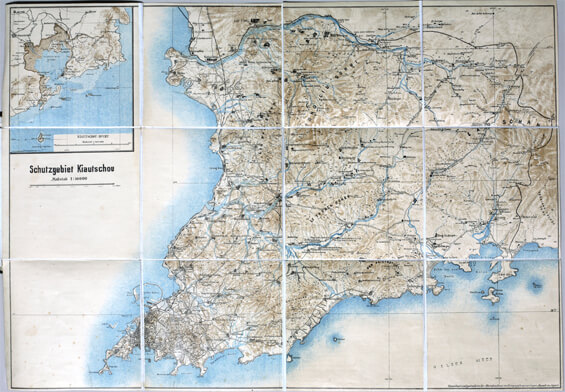
The German concession of Kiautschou in China
On permanent loan from the Simon family, Bergisch Gladbach, from the estate of their father Anton Müller, who was interned in Bando
The development of East Asia as a key trading region played a major role in the German Empire's colonial policy. The murder of two German missionaries in China provided Emperor Wilhelm II with a welcome pretext to occupy Kiautschou Bay on the Chinese east coast in 1897, a location deemed suitable for a naval base. In March 1898, a 99-year lease agreement was concluded with China for the Kiautschou area, including the small fishing village of Tsingtau. To protect the German leased territory, the Imperial Navy formed the IIIrd Naval Battalion (a marine infantry unit), which was stationed in Tsingtau, reinforced by naval artillery. Within a few years, the town was developed into a prosperous port, trading and university city with considerable financial investment. The population rose from 15,600 to 55,000 in 11 years, with the number of non-Chinese residents increasing from 2,500 to 4,500. Following the outbreak of the First World War, the military brought together German working reservists and volunteers from across China in Tsingtau. On 10 August 1914, Japan, an ally of Britain, issued an ultimatum – which went unanswered – demanding the complete surrender of the leased territory. What followed was a battle lasting several weeks, initially involving localised skirmishes, followed from late October by major assaults by the besieging forces, which finally came to an end on 7 November 1914 with the surrender of the approximately 5,000 besieged soldiers – who were now facing 60,000 Japanese troops. The colony thus lasted for a mere 16 years.

On permanent loan from the Simon family, Bergisch Gladbach, from the estate of their father Anton Müller, who was interned in Bando
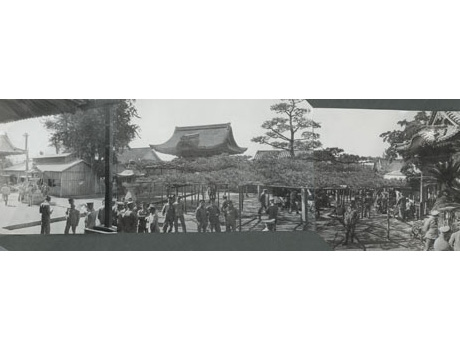
The temporary prisoner-of-war camp at the temple in Marugame
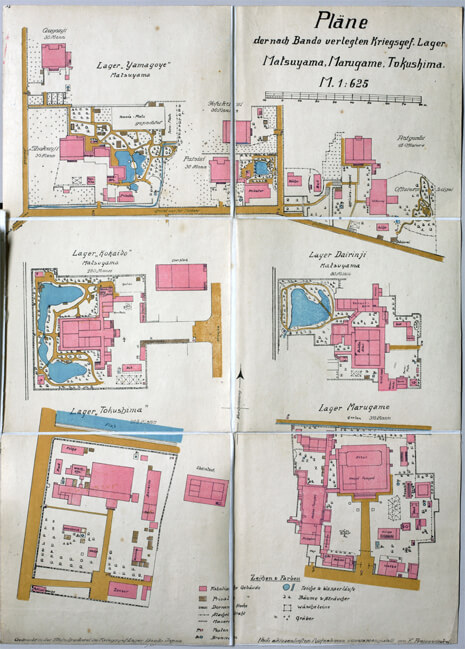
The approximately 4,700 prisoners of war fit for transport (among them the 400-strong Austro-Hungarian crew of the 'Kaiserin Elisabeth') were shipped to Japan on three cargo steamers; the journey took three to four days, depending on the destination. As it was expected that the war – and therefore the internment – would not last long, the prisoners of war were housed in makeshift camps such as public buildings and temples. One of these temple camps was in Marugame, with two further camps located in Matsuyama and Tokushima.
On permanent loan from the Simon family, Bergisch Gladbach, from the estate of their father Anton Müller, who was interned in Bando
The photos show the temple grounds and the traditional Japanese rooms, which were laid with tatami (rice straw mats) and served as sleeping, living and dining areas all in one.
On loan from Ingeborg Esser from the estate of her father, Heinrich Thies, who was interned in Bando
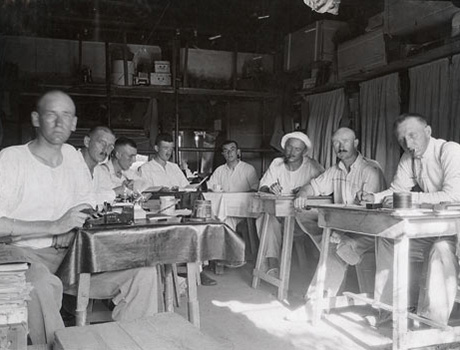
On loan from Ingeborg Esser from the estate of her father, Heinrich Thies, who was interned in Bando
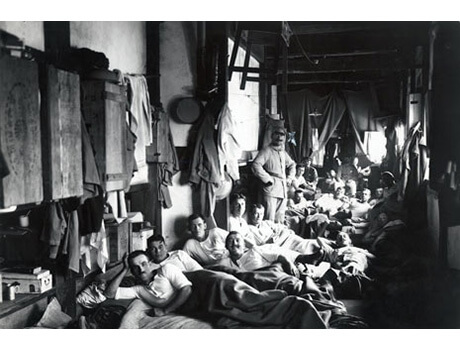
On loan from Ingeborg Esser from the estate of her father, Heinrich Thies, who was interned in Bando
As the prisoners were not required to work, they were able to keep themselves physically and mentally active. There were gymnastics displays, concerts by the Marugame band conducted by the violinist Paul Engel, and chamber music evenings.
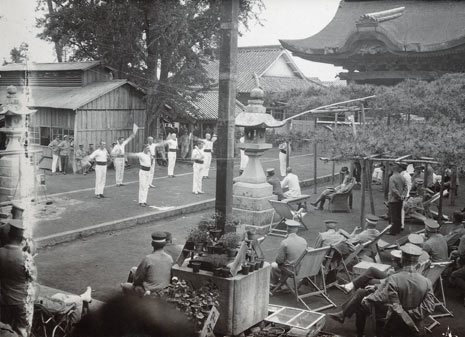
On loan from Ingeborg Esser from the estate of her father, Heinrich Thies, who was interned in Bando
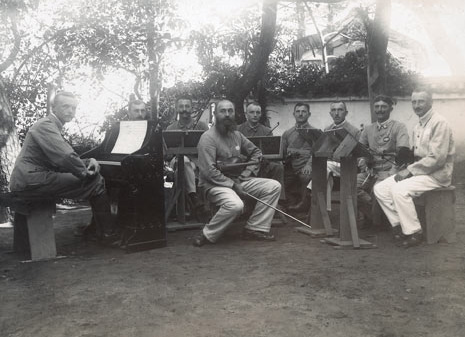
On loan from Ingeborg Esser from the estate of her father, Heinrich Thies, who was interned in Bando
The temporary prisoner-of-war camp at the temple in Marugame
Music at the Marugame Temple Camp
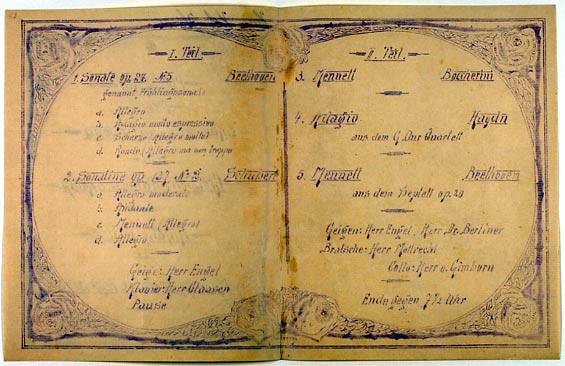
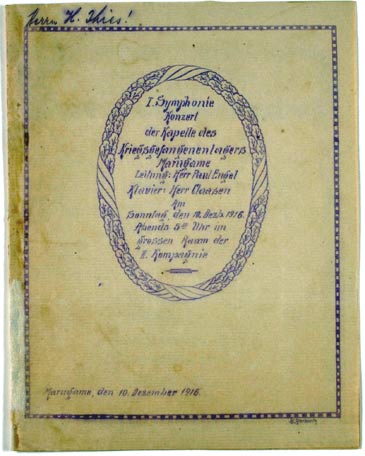
The programme for the first symphony concert featured Beethoven's Piano Concerto No. 2 in B flat major, Op. 19. Also on display are Beethoven's meticulous transcription of the solo part and a cadenza for the first movement, which he wrote for his pupil Archduke Rudolph.


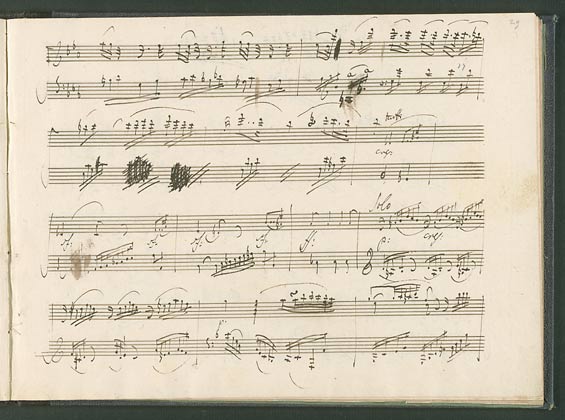
Beethoven-Haus Bonn, Collection H. C. Bodmer, HCB Mh 4

Beethoven-Haus Bonn, Collection H. C. Bodmer, HCB Mh 13
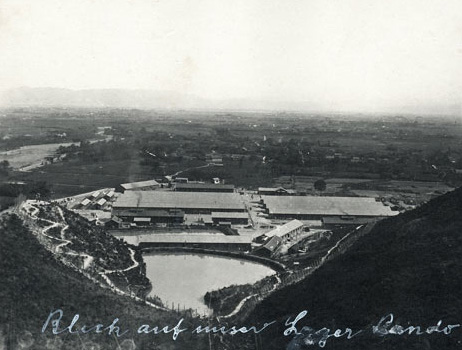
The barracks camp in Bando
The 12 temporary camps were gradually closed down as it became clear that the war was not likely to end soon and, moreover, as external observers criticised the accommodation, which was in some cases inadequate, cramped and overcrowded. Instead, six larger barracks camps, largely identical in architectural design, were built: Kurume, Nagoya, Narashino, Aonogahara, Ninoshima and Bando. In April 1917, the approximately 1,000 prisoners from the three camps on the island of Shikoku – Marugame, Matsuyama and Tokushima – were transferred to Bando (approximately 12 km from the prefectural capital Tokushima, now part of the city of Naruto).

On loan from Ingeborg Esser from the estate of her father, Heinrich Thies, who was interned in Bando

On permanent loan from the Simon family, Bergisch Gladbach, from the estate of their father Anton Müller, who was interned in Bando
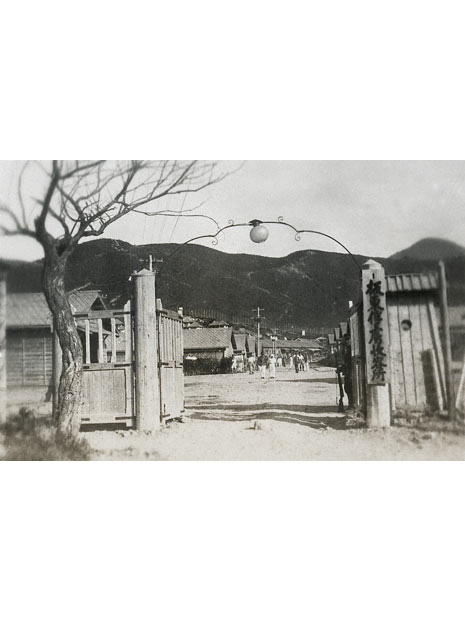
On loan from Ingeborg Esser from the estate of her father, Heinrich Thies, who was interned in Bando
Matsue Toyohisa, who had already proven himself in the management of the Tokushima camp, was appointed camp commander. He ran the camp in a humane and liberal manner, allowing the prisoners to engage in a wide range of activities and leasing additional land for agricultural use and the construction of sports facilities. Due to its remote location in a rural farming area, and moreover on an island with no access to an international port, the risk of escape was very low, which is why it was possible to operate less strictly than in other camps. This resulted in lively contact with the local Japanese rural population. The Japanese government therefore deliberately established Bando as a 'model camp'. Although this special status continues to this day, it is not really justifiable. There was also an orchestra in Kurume and Nagoya, a string orchestra in Narashino, and a camp printing press in all the camps.
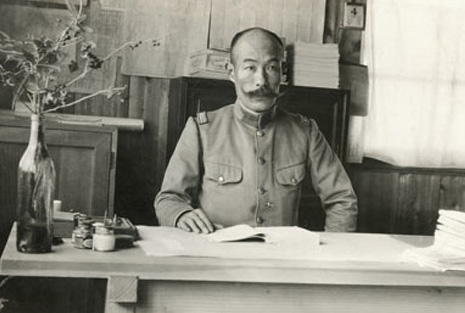
On loan from Ingeborg Esser from the estate of her father, Heinrich Thies, who was interned in Bando
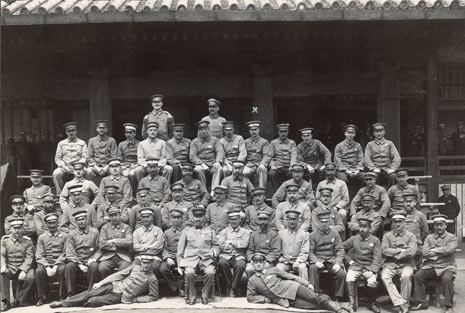
On loan from Ingeborg Esser from the estate of her father, Heinrich Thies, who was interned in Bando
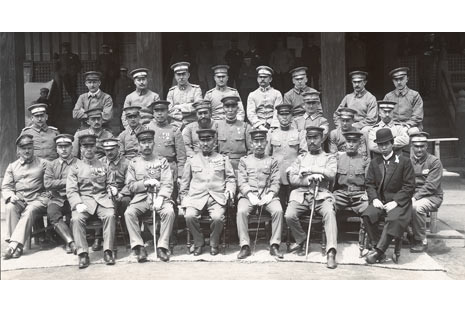
On loan from Ingeborg Esser from the estate of her father, Heinrich Thies, who was interned in Bando
The barracks camp in Bando
To mark the arrival of 90 prisoners of war from Kurume, a 'guidebook' was printed by the Bando camp in August 1918. The map shown here depicts a walking tour; explanations of the numbered points can be found in the guidebook. In the south-west, a commercial district emerged ('Tapautau Market Quarter' – the name of a shopping street in Tsingtau), where the internees practised their trades and offered each other various services as well as food and luxury goods.
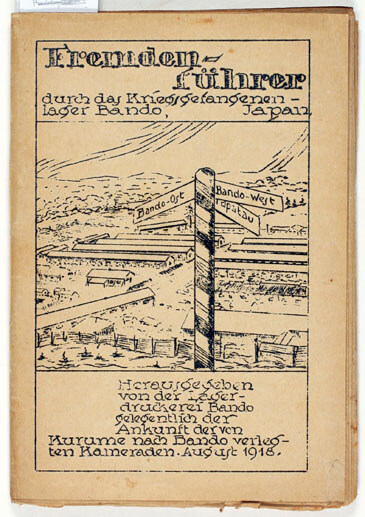
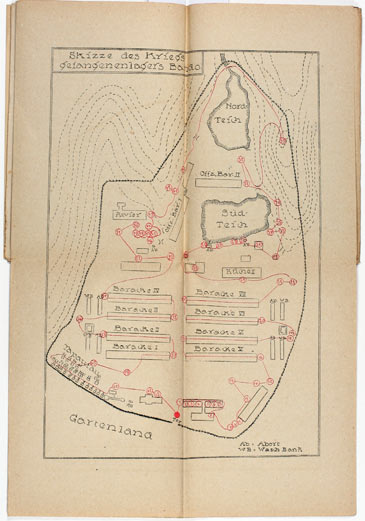
On loan from Ingeborg Esser from the estate of her father, Heinrich Thies, who was interned in Bando
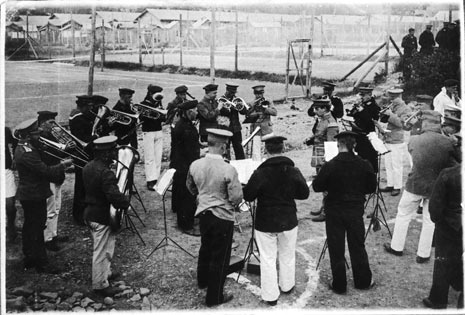
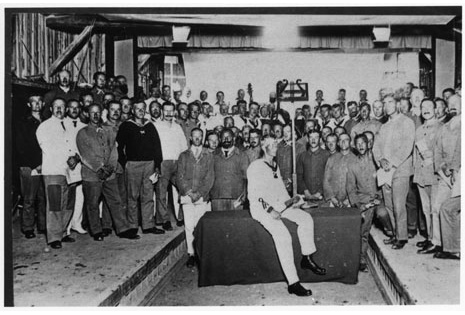
The guide also lists the various musical groups in the camp and provides an overview of the plays that were performed. There were two orchestras, each comprising 45 musicians (the Tokushima Orchestra and the Engel Orchestra), two brass bands and two choirs, each with 60 singers.
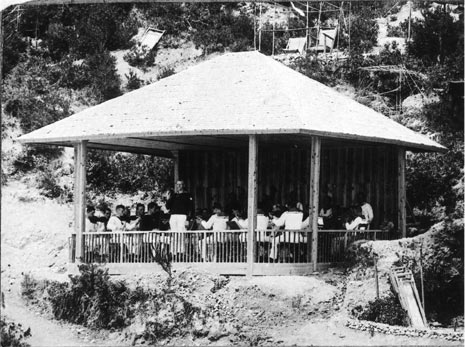
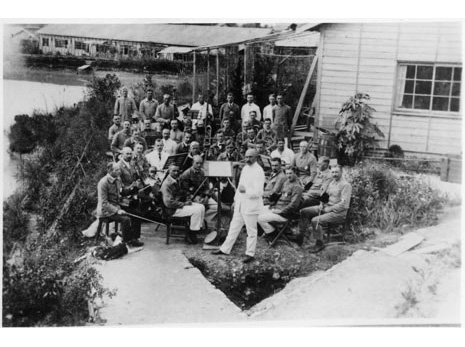
German House Naruto
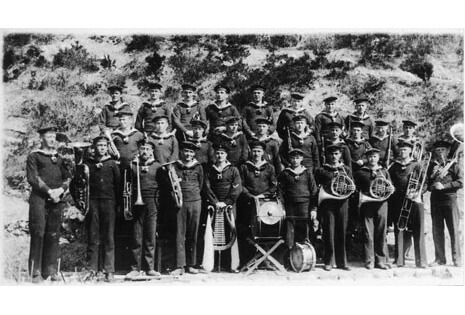
German House Naruto
German House Naruto
German House Naruto
The barracks camp in Bando
Concerts featuring works by Beethoven
There were two printing works in Bando: the lithographic press and the camp printing works, from which most of the publications originated. In contrast to the hectography process using matrices, which had been used in Marugame, a more complex wax-sheet reproduction process was employed in Tokushima and subsequently in Bando as well. This enabled the production of impressive, multi-coloured programmes, postcards, maps, camp-issued stamps and camp currency, and even books and brochures. The multi-coloured event programmes are valuable historical material that provides a vivid picture of the diverse cultural activities within the camp. During the approximately 32 months of captivity in Bando, there is evidence of over 100 concerts, chamber music recitals, song recitals and entertainment evenings. In addition, at least 21 plays were performed, some of them several times in succession. For those involved, membership of an orchestra, choir or theatre group was a way to escape boredom (the prisoners of war were not required to perform forced labour) and to prevent 'camp madness'; for the audience, the cultural events offered a pleasant break from everyday camp life. The musicians had brought some of the instruments with them from China to the internment camp; others were either purchased, made in the camp carpentry workshop, or donated by German civilians living in freedom in Japan or by Japanese military personnel. For the most part, mixed entertainment programmes featuring light music were performed: popular and well-known pieces from Viennese operettas by Johann Strauss, Franz von Suppé and Carl Zeller, marches and waltzes by contemporaries such as the Berliners Leon Jessel and Paul Lincke (the latter known as the father of the 'Berlin operetta' thanks to the number 'Das ist die Berliner Luft, Luft, Luft' from the successful 'Frau Luna'), as well as overtures by Offenbach and Rossini. Only 18 of the 68 programmes available featured more demanding, strictly 'classical' concerts, including seven chamber music evenings. Of the latter, two were all-Beethoven evenings, whilst another included works by Beethoven. Among the remaining 11 symphony concerts, however, there are an impressive four all-Beethoven programmes, and a further two concerts contain at least some works by Beethoven. The reception of Beethoven, the national hero and titan, was in keeping with the patriotic sentiments of the prisoners of war.
Programme schedule
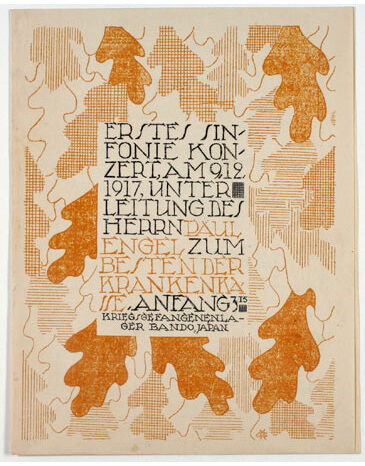
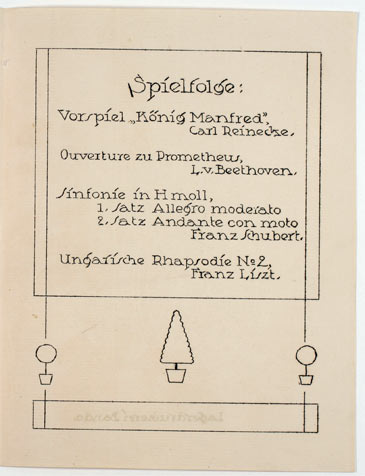
Programme schedule
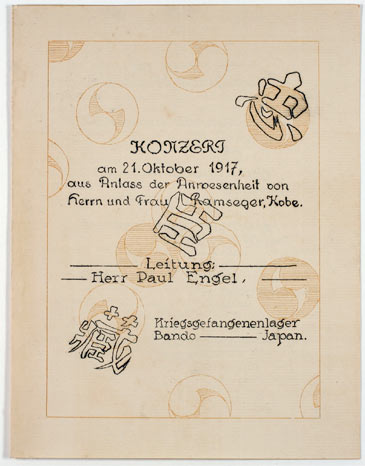
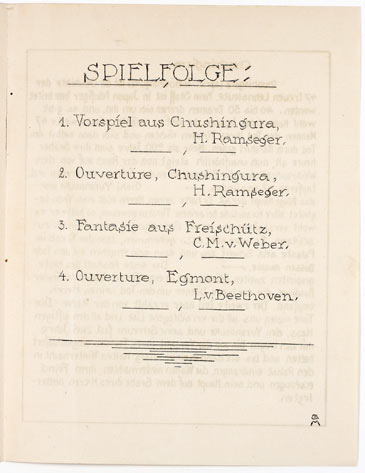
To mark the visit of the composer Hans Ramseger, who lived in Kobe, Japan, his prelude and overture to 'Chushingura' were performed. This folk legend, known to everyone in Japan, had also been adapted for Kabuki theatre and was first made into a film in 1907. In addition, Paul Engel's orchestra played Carl Maria von Weber's 'Freischütz' and Beethoven's Egmont Overture, Op. 84, which had already been performed three weeks earlier. As Beethoven himself had done, his music was also played for charitable purposes; on this occasion, the Prometheus Overture, Op. 43, was performed in aid of the camp's own health insurance fund.
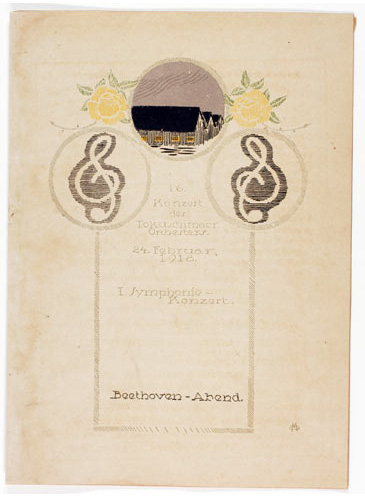
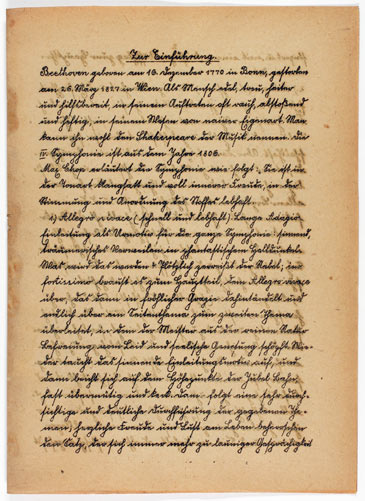
Introductory text
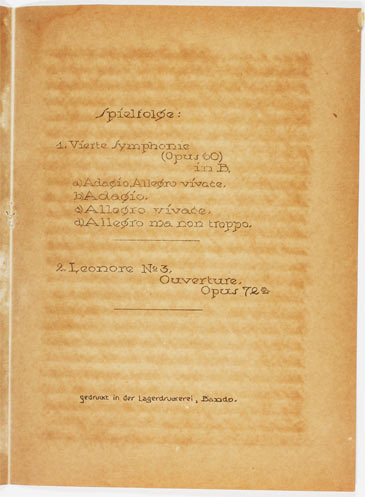
The Tokushima Orchestra performed what was likely the Japanese premiere of Beethoven's Symphony No. 4, Op. 60, during a Beethoven concert; this was accompanied by an introductory text based on Max Chop's 1910 publication 'Ludwig van Beethoven's Symphonies'. Hermann Richard Hansen from Flensburg, an Oberhoboistenmaat (Obermaat is the rank designation in the Imperial Navy, and Hoboist refers to a military musician), conducted both the band of the M.A.K. (Kiautschou Sailors' Artillery) and the Tokushima Orchestra. He played the violin and several wind instruments.
The barracks camp in Bando
Concerts featuring works by Beethoven
At the Beethoven chamber music evening on 3 February 1918, in addition to a transcription of the Wind Quintet, Op. 16, for piano quartet, the 'Kreutzer Sonata', Op. 47, was performed; the original manuscript of this work is on display.

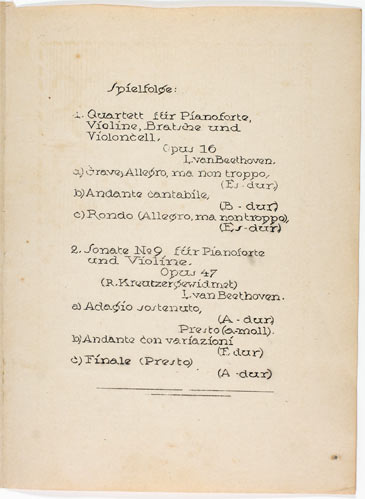
Programme schedule
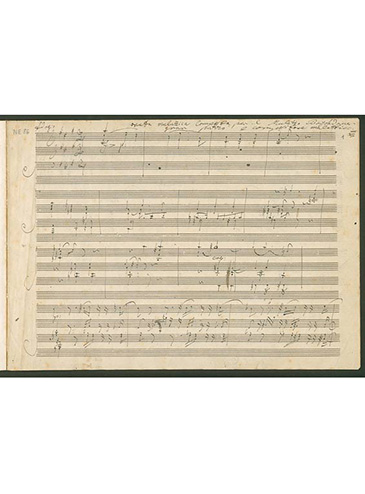
Beethoven-Haus Bonn, NE 86
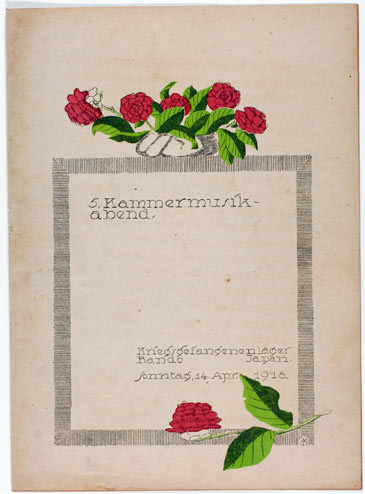
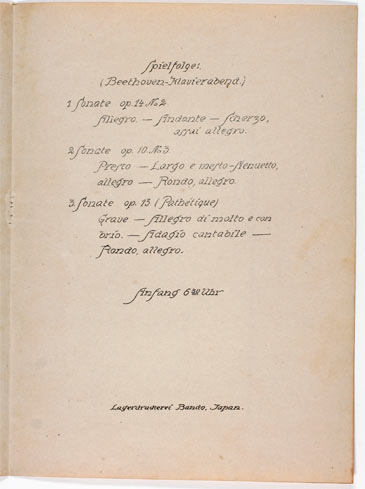
Programme schedule
At the end of April 1918, the Engel Orchestra performed Beethoven's Fifth Symphony, which had already been performed the previous year at the Kurume camp, a place known for its particularly vibrant musical life. It was also there that the Japanese premieres of the Eighth (1916) and Seventh Symphonies (1919) took place.

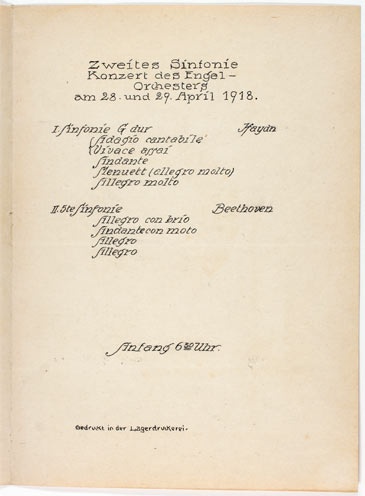
Programme schedule
Paul Engel taught music in the camp and was permitted to teach Japanese pupils outside the camp twice a week. Following the opening of the country, enforced by the Americans in the 1860s, Japan underwent a profound modernisation based on the Western model. This included a widespread and intensive cultivation of Western music, which had been introduced to Japan in the mid-16th century by Portuguese missionaries.
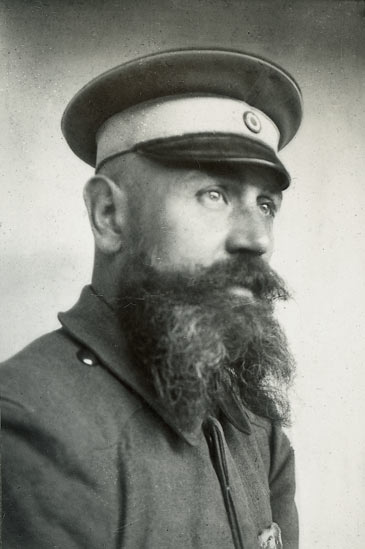
On loan from Ingeborg Esser from the estate of her father, Heinrich Thies, who was interned in Bando

German House Naruto
The barracks camp in Bando
The Japanese premiere of Symphony No. 9, Op. 125, in Bando
A good year before its premiere on 1 June 1918, the ode 'Ode to Joy' – naturally in an arrangement for male voices – featured on a programme by the Tokushima Orchestra, which once again included Paul Engel's 'Tsingtau Fighters' March'.

According to reports in the 'Täglicher Telegramm-Dienst Bando' (Bando Daily Telegram Service), rehearsals for the full performance had been taking place since 3 April, and a public dress rehearsal with the 80-strong choir was held on 31 May. Like most concerts, this one probably took place in the 'multi-purpose hall' – 'Barrack 1'.

German House Naruto
The concert programme is, significantly, illustrated with Max Klinger's statue of Beethoven, first exhibited at the Vienna Secession in 1902, which depicts the composer as an ancient god. Klinger's original model can be viewed in the pavilion in the courtyard of the Beethoven-Haus. The libretto was included with the programme; the performers received a written introduction to the work, which in turn was based on Max Chop's analysis. The detailed printed text on the symphony may well be a transcript of a lecture. It is influenced by Wagner's image of Beethoven and also reproduces excerpts from the 'programme' formulated by the latter.
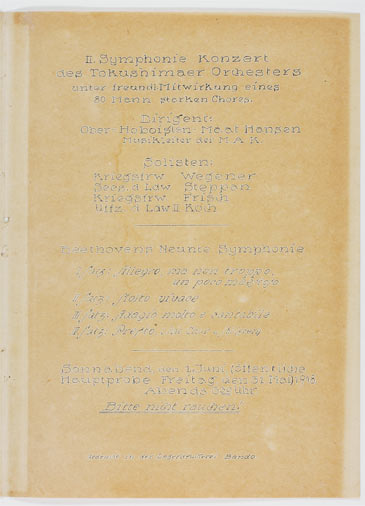
Programme schedule
Although, unlike other concerts, no review appeared in the camp newspaper 'Die Baracke' ('The Barracks') – which was published weekly (and later monthly) – the following two issues did feature a lengthy cultural studies essay by Peter Spurzem, subtitled 'Schiller – Beethoven – Goethe'.
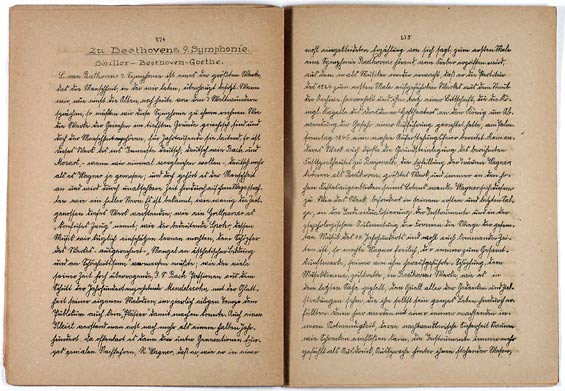
Shortly afterwards, the symphony was also performed in the Kurume and Narashino camps. However, 'Daiku', No. 9, as the Japanese call it, did not begin its 'triumphal march' across Japan until after the war had ended. It was only through performances outside the camps, such as at the Kurume Girls' School, that the work became widely known. Since then, it has enjoyed unbroken popularity and is performed in a large number of public concerts every year. The exhibited Beethoven manuscript, containing part of the coda of the second movement, is now part of the UNESCO-designated 'Memory of the World'.

Beethoven-Haus Bonn, Collection H. C. Bodmer, HCB Mh 2
The barracks camp in Bando
Further concerts featuring works by Beethoven

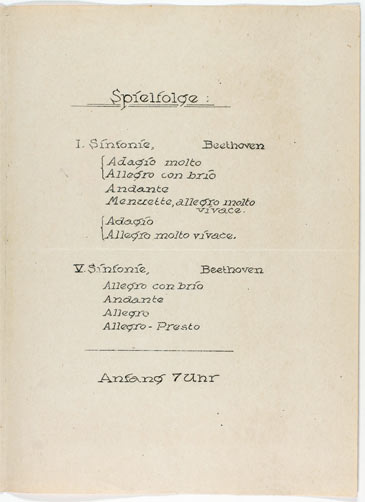
Programme schedule


Programme schedule
When it was revived, the 5th Symphony was combined with the 1st Symphony. The concert was reviewed in the camp newspaper. At the chamber music concert on 26 March 1919, the Violin Sonata Op. 30 No. 2 was performed; the original manuscript of this work is held in the collection of the Beethoven-Haus.
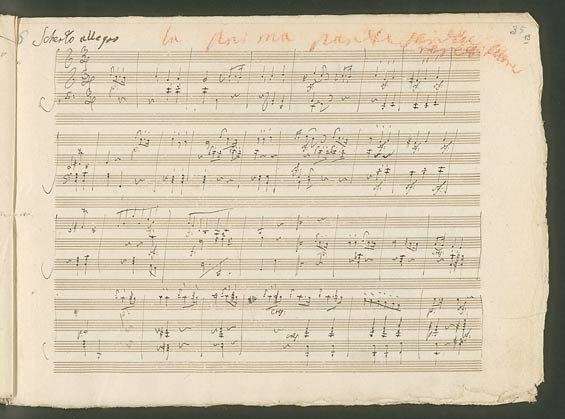
Beethoven-Haus Bonn, Collection H. C. Bodmer, HCB Mh 26
The start of the third movement. Beethoven later added in red: 'la prima parte senza ripetizione'. The first part of the scherzo was therefore not to be repeated.
The barracks camp in Bando
Further concerts featuring works by Beethoven
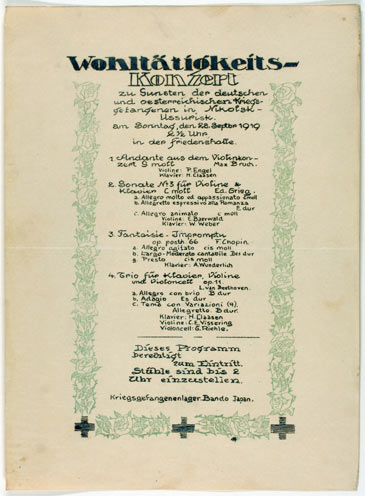
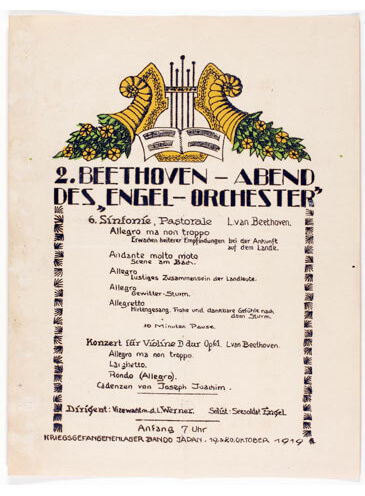
Almost a year after the end of the war – the winding-up process and logistical challenges had delayed the return home – several charity concerts were organised to raise funds for the suffering prisoners of war in Siberia.
The Engel Orchestra gave its second Beethoven evening, featuring the Violin Concerto Op. 61 (with Paul Engel as soloist; the orchestra was conducted by Willy Werner, who also led a choir) and the Sixth Symphony. In addition to the composer's autograph score of this extraordinary work, the Beethoven-Haus collection also contains the copy checked by the composer and marked with numerous red-ink corrections, which served as the basis for the first edition.
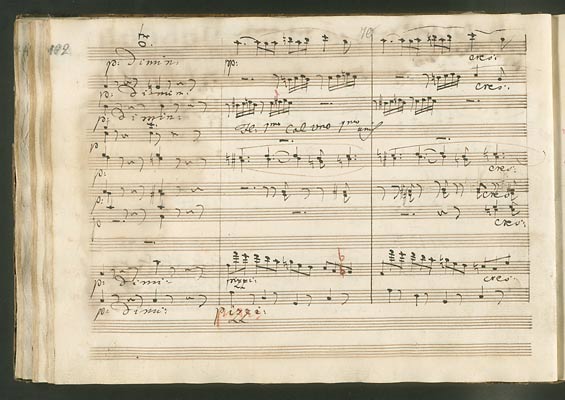
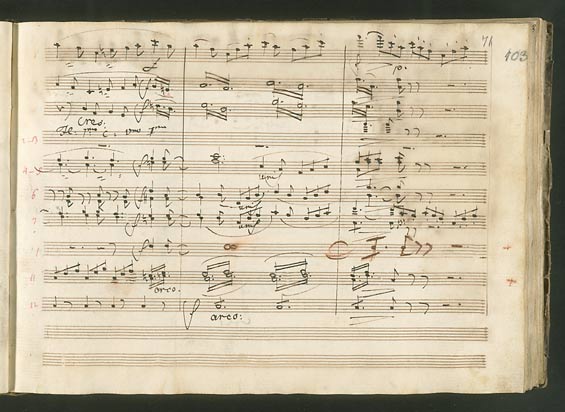
Beethoven-Haus Bonn, NE 146
Beethoven gave this copy to his Leipzig publisher, Gottfried Christoph Härtel, in Vienna in September 1808. On display are two pages from the 'Scene by the Brook', with additions made by the composer in red pencil. The score served as the basis for the first edition, which appeared in parts in 1809 and in full score form in 1826. It is likely that sheet music from this publisher was also used in Bando. Its editions of Beethoven's works were the most widely distributed worldwide in the second half of the 19th century.
The barracks camp in Bando
More concerts
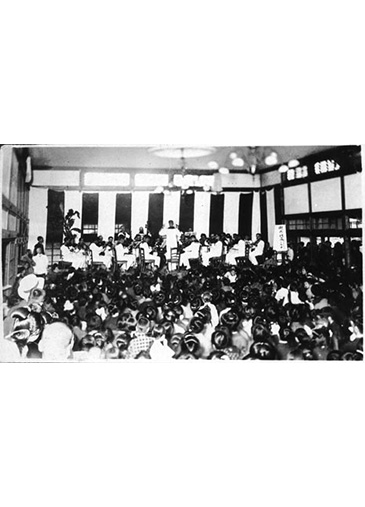
In March 1919, a public German-Japanese concert was held in Tokushima featuring the Engel Orchestra. It is thought that the Japanese performers were drawn from Engel's pupils. The programme included excerpts from Verdi's 'La traviata' and Japanese songs. The photograph does not show the Engel Orchestra, but the Tokushima Orchestra conducted by Hermann Richard Hansen, which also performed in Tokushima.

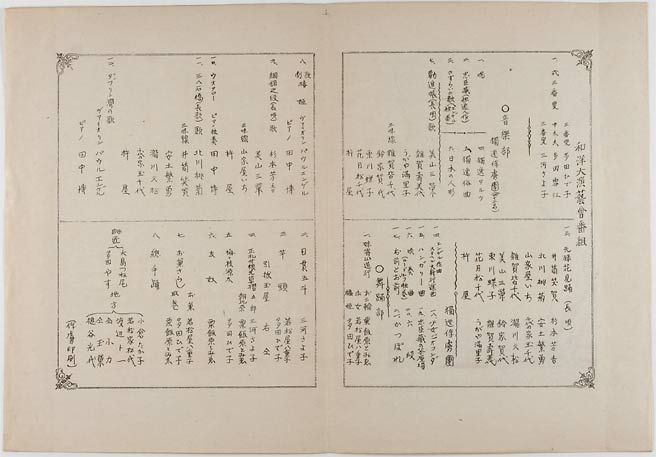
Programme schedule
German House Naruto
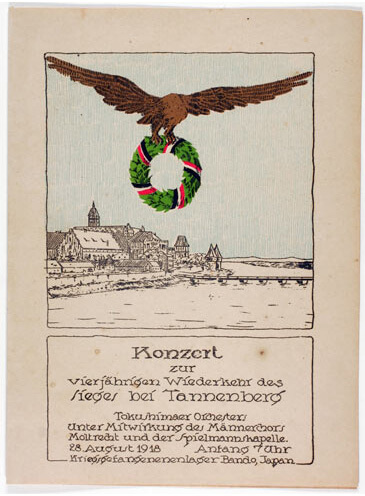
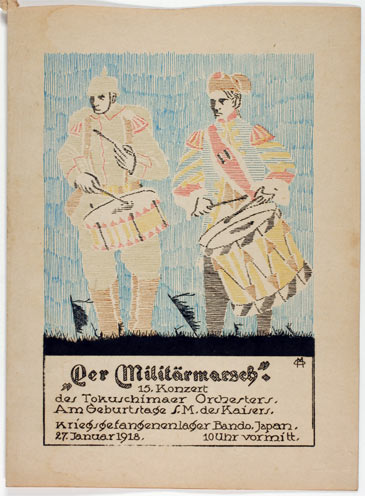
Concerts featuring military music were organised on all patriotic occasions. Examples include the concert marking the fourth anniversary of the victory at Tannenberg (East Prussia), which featured 'Hoch Hindenburg' and the choral piece 'Wir müssen siegen' conducted by Kapellmeister Hansen, with the participation of the Moltrecht Choir and another military band, as well as the concert held to celebrate the Emperor's birthday. This took the form of a themed concert tracing the history of the military march from the 13th to the 19th century and also included Beethoven's 'York March' WoO 18.
Programme schedule
The barracks camp in Bando
More concerts
To mark the opening of Bando City Park, the M.A.K. Band performed popular marches by the military composer Carl Teike. Of course, there were also Christmas concerts; in 1918, the M.A.K. String Orchestra performed a 'Christmas medley' arranged by Hansen.

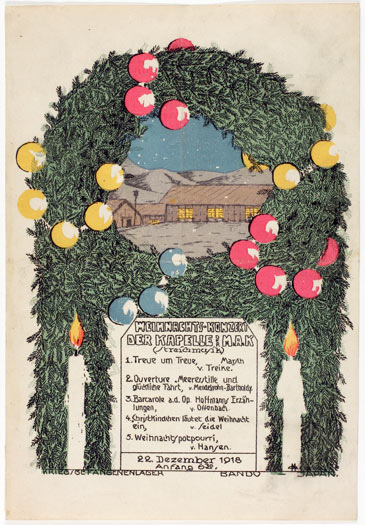
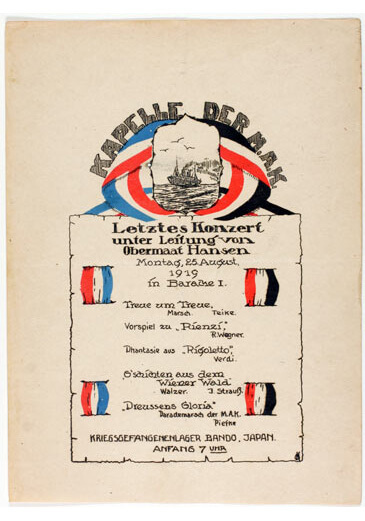
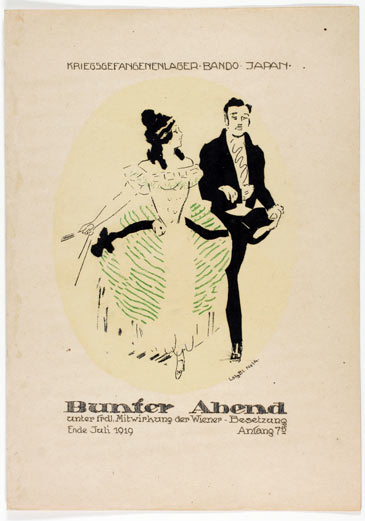
Composition by Hansen
Along with six other prisoners from Schleswig-Holstein, Hansen was released as early as 26 August 1919, so that he could participate in the vote on whether Schleswig should belong to Germany or Denmark. He gave his farewell concert the night before. Music groups also performed at several 'variety evenings'. In late July 1919, Hansen's couplet 'Why the rush? We'll wait a little longer', which had been printed in the camp magazine, was performed.
The barracks camp in Bando
Theatre in Bando
Culture was also fostered in other areas of the prisoner-of-war camps. Theatrical performances were widespread, with comedies being staged primarily as a distraction from life as a prisoner. However, more sophisticated plays were also on the programme. Since the stage in Barrack 1 was not built until later, an open-air performance was held for Schiller's 'The Robbers'. The female roles, of course, had to be played by men.

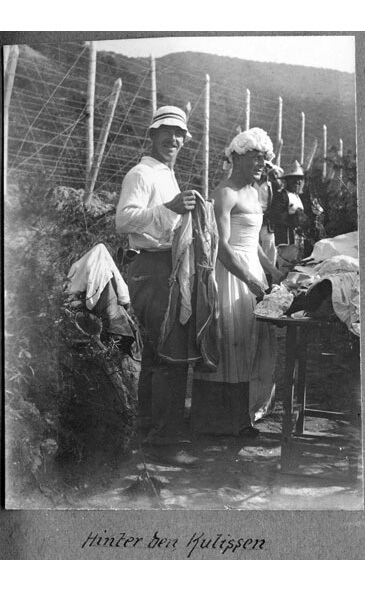

German House Naruto
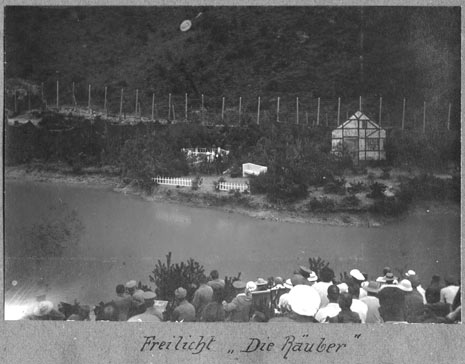
German House Naruto
The barracks camp in Bando
Theatre in Bando
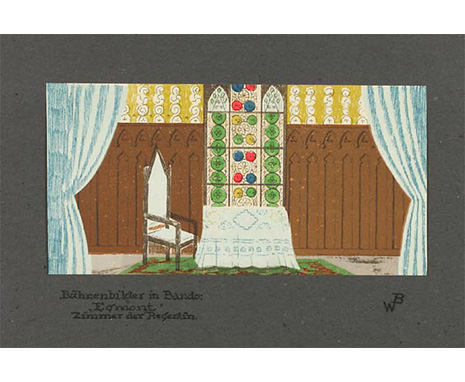
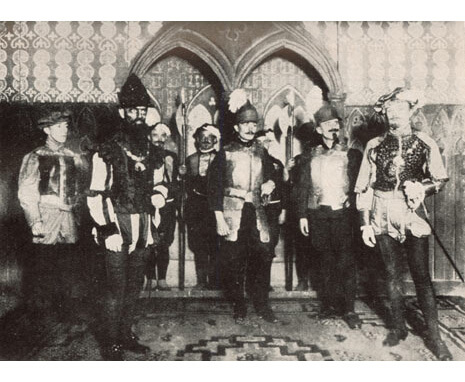
In most of the productions, the camp orchestras – or parts of them – contributed overtures and interludes. A definite highlight was the five-time performance of Goethe's tragedy 'Egmont', featuring Beethoven's incidental music.
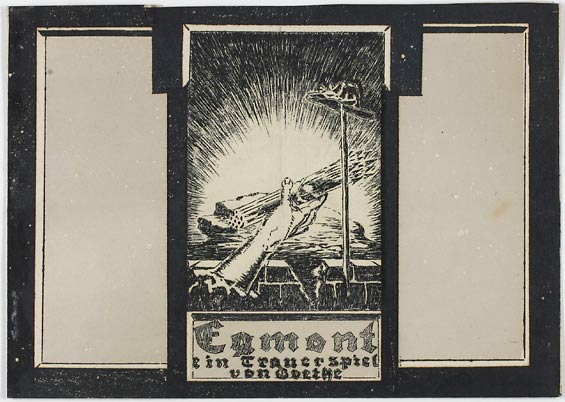
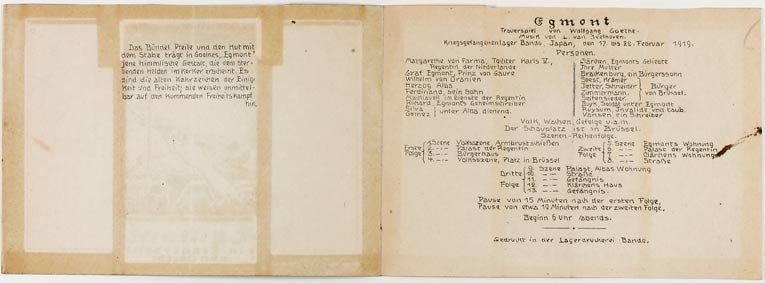
Programme
The collection of stage designs reproduced in the final issue of 'Baracke' attests to the dedication and artistic skill of the theatre enthusiasts among the prisoners. For 'Egmont', the camp newspaper published an introduction that drew parallels between the themes of freedom and heroic death in the play and the prisoners' own situation as prisoners of war. While the reviewer acknowledges the inevitable shortcomings of the performances due to conditions in the camp, he particularly highlights the successful aspects. Hansen may have been the author of the detailed explanation of the incidental music.
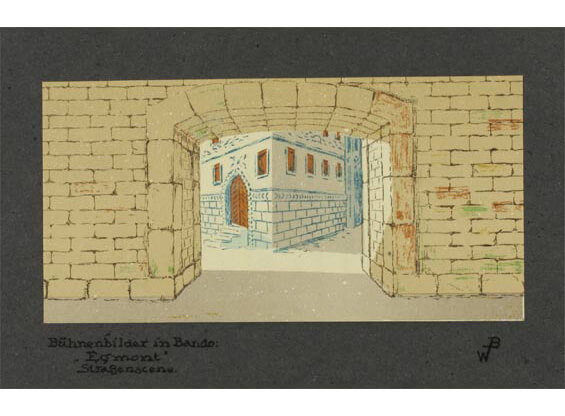
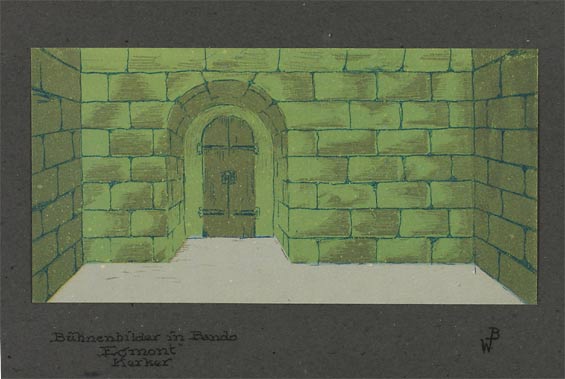
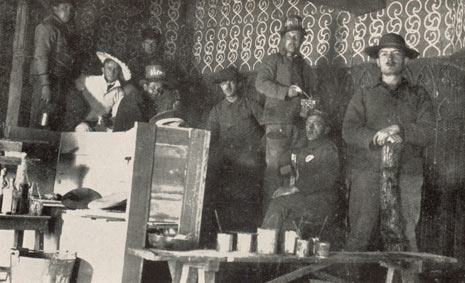
Work on the set design
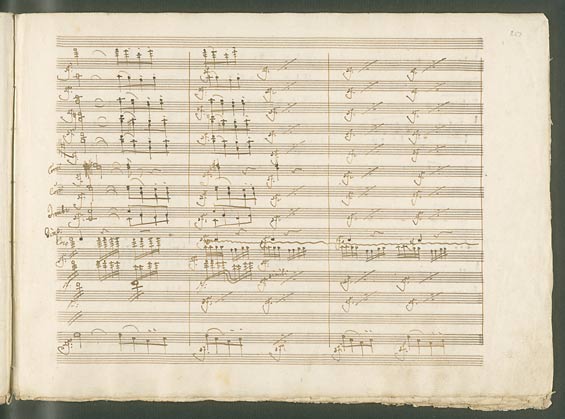
This copy contains not only the composer's corrections to the musical score, but also numerous stage directions that link the music to the drama.

Beethoven-Haus Bonn, NE 64
'Dungeon'
The text shows the beginning of the final musical number, with Beethoven's heading: 'Egmont • Protect your possessions! And to save what is dearest to you, fall joyfully, as I shall set an example for you.' Following these words, the orchestra enters swiftly and passionately –. The poet had already conceived the tragedy in such a way that the music was intended to be an integral part of the drama. After the curtain falls, Goethe wrote: 'The music enters and concludes the piece with a victory symphony.' Beethoven's instructions go beyond Goethe's ideas in many places. The poet remarked: 'Beethoven has realised my intention with admirable genius.'
The barracks camp in Bando
Theatre in Bando
The programme for Lessing's 'Minna von Barnhelm' notes the ban on applause issued by the Japanese camp administration. A detailed introductory text was published for Calderón's verse drama 'Life Is a Dream'.
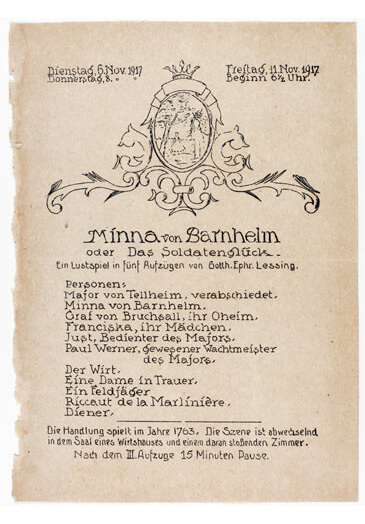
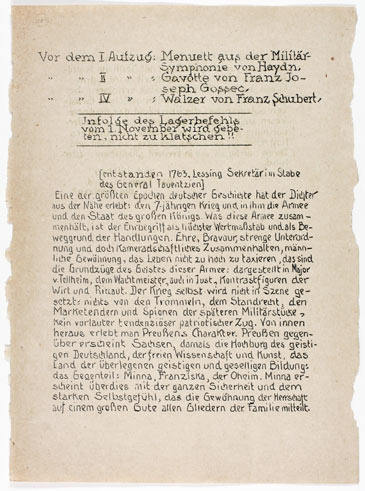
Programme

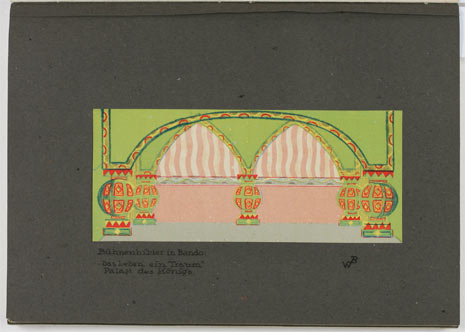
Set design by Wilhelm Blomberg
Ernst von Wildenbruch, the poet who wrote 'Die Rabensteinerin', composed a poem in 1891 to mark the dedication of the Beethoven-Haus, which was recited at the ceremonial opening of the birthplace as a memorial to Bonn's greatest son in May 1893. The emphatic poem concludes: 'I do not come to mention his name, / for it is written in the stars; / I come to urge you all / to love him with heartfelt love.'
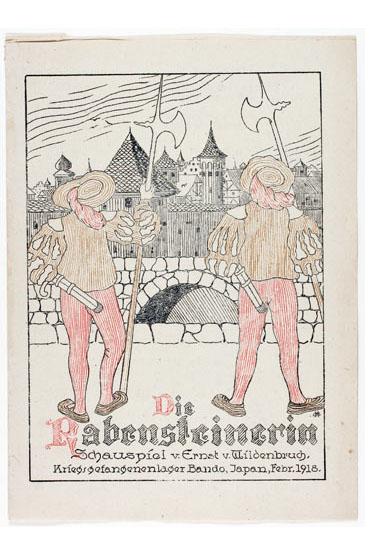
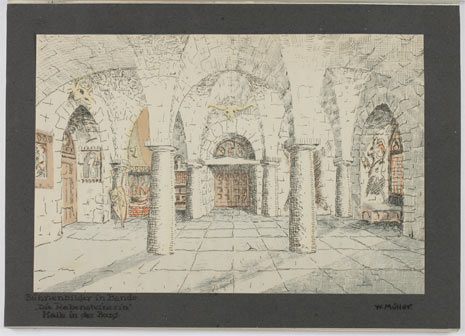
Set design by Wilhelm Müller
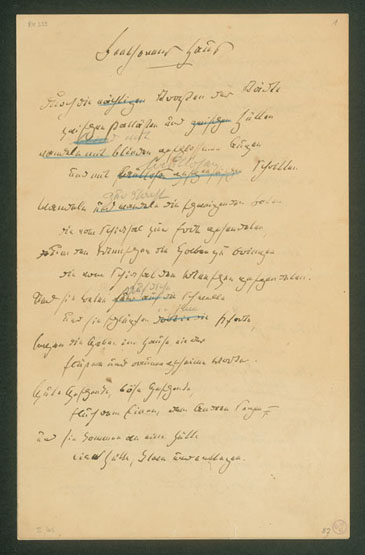
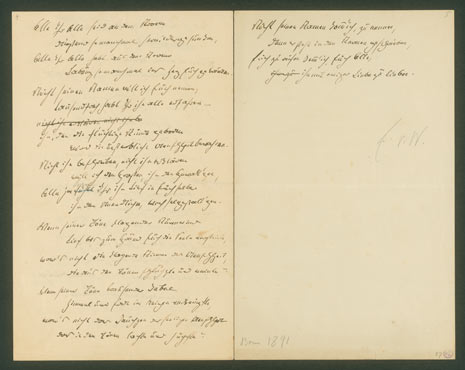
Beethoven-Haus Bonn, BH 239
The barracks camp in Bando
Theatre in Bando
Puppet shows featuring intricately hand-carved marionettes were also performed at the camp. The 'Exhibition of Visual Arts and Crafts' in March 1918 showcased not only the elaborate theatrical props and costumes produced in the camp workshops but also the marionette theatre.
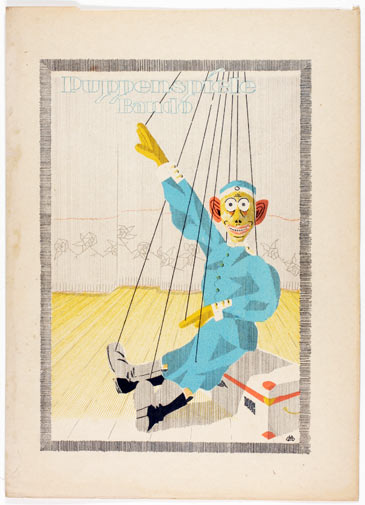
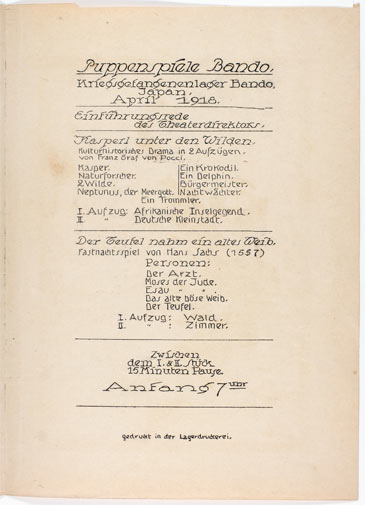
Programme
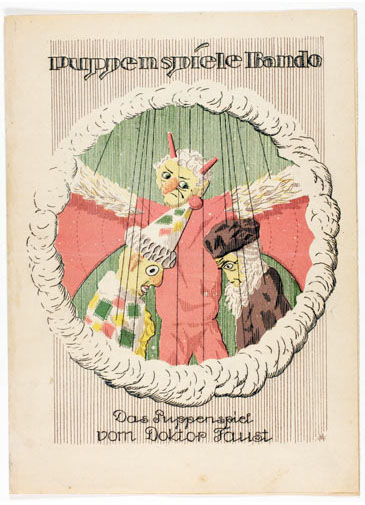
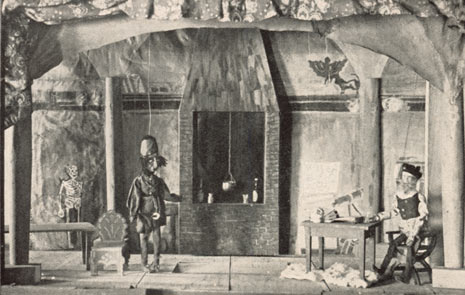
Scene from 'The Puppet Show of Doctor Faust'

German House Naruto
The barracks camp in Bando
Exhibitions in the prisoner-of-war camps
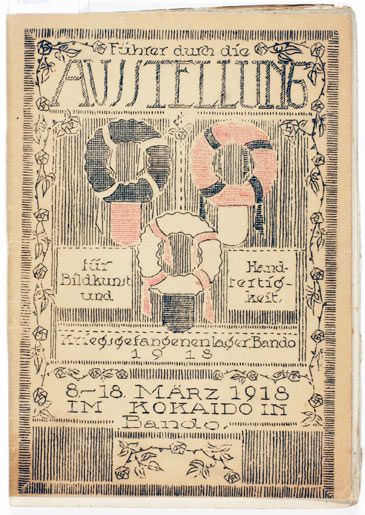
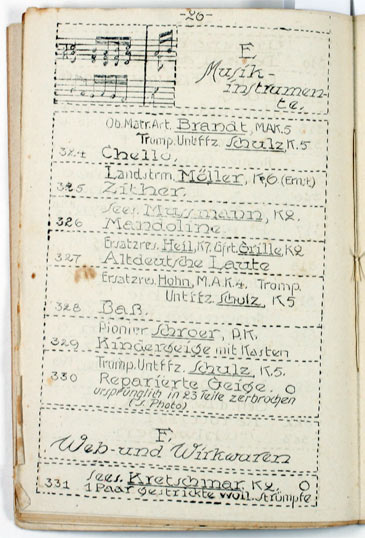
On loan from Ingeborg Esser from the estate of her father, Heinrich Thies, who was interned in Bando
The municipality of Bando made its community hall, along with large outbuildings and outdoor grounds, available for the exhibition. The prisoners of war presented over 450 exhibits, most of which were available for purchase or could be ordered. The 'Visual Arts' section included over 200 chalk, charcoal, ink, and watercolor drawings, as well as several oil paintings. The 'Handicrafts' section was divided into 11 subcategories, such as shipbuilding, children's toys, food, as well as musical instruments (with 7 exhibits) and collections of stuffed animals and preserved plants – a hobby pursued by Heinrich Thies.
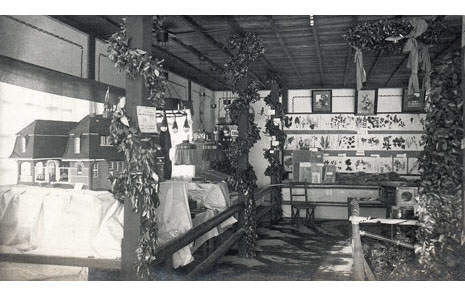
On loan from Ingeborg Esser from the estate of her father, Heinrich Thies, who was interned in Bando

German House Naruto
The exhibition attracted a great deal of public interest; 19 interpreters guided over 50,000 visitors, including many school groups.
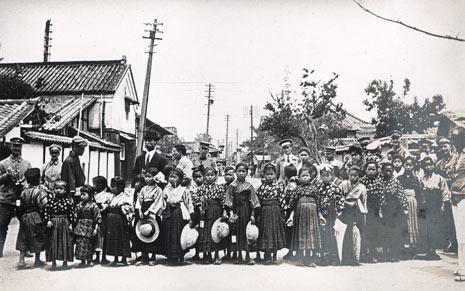
On loan from Ingeborg Esser from the estate of her father, Heinrich Thies, who was interned in Bando
The other camps also held such exhibitions, as evidenced by the exhibition catalogue from Ninoshima and the postcard from Kurume. Such postcards were printed in the camp printing shops for all special occasions and stamped with standard text stamps. This simplified the censorship process and thus contributed significantly to faster delivery times.

On loan from Prof. Peter Pantzer

On loan from Prof. Peter Pantzer
The barracks camp in Bando
End of captivity
Here you can see documents related to the prisoners of war's return home. In anticipation of their imminent departure, the final issue of 'Baracke' was published in September 1919. However, it wasn't until the end of the year that the Japanese government had organised their transport home using six chartered cargo ships.
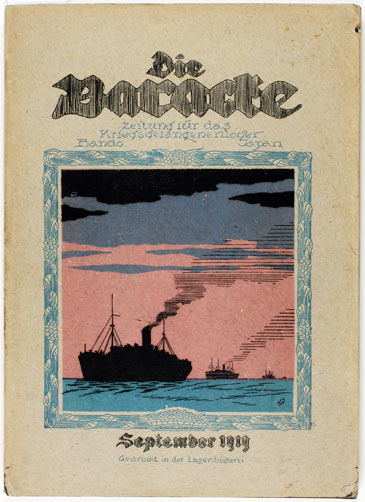
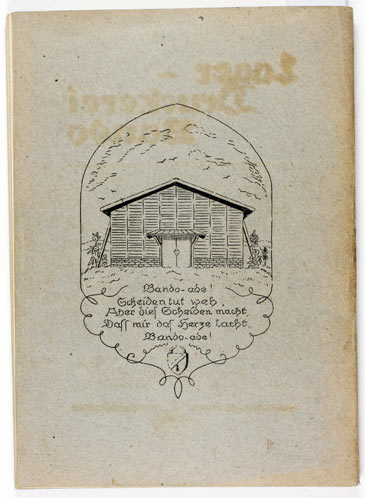
Back cover of the final issue
On loan from Ingeborg Esser from the estate of her father, Heinrich Thies, who was interned in Bando
The prisoners from Bando travelled on the 'Hofuku Maru', which set sail from Kobe on 30 December and arrived in Wilhelmshaven 56 days later, on 24 February 1920. The equipment from the camp printing press had been brought along on the journey, and six issues of the magazine 'Die Heimkehr' ('The Homecoming') appeared on board. The first issue, dated 8 January 1920, included this map as a supplement. The route travelled up to that point is marked with red dots; the rest of the route was added in pencil by sailor Anton Müller.
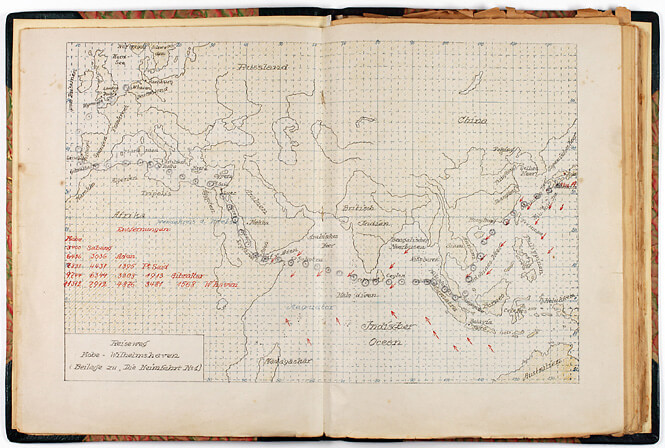
On permanent loan from the Simon family of Bergisch Gladbach, from the estate of their father, Anton Müller, who was interned in Bando
A concert was held on the ship, featuring an arrangement of the Andante movement from Beethoven's Piano Sonata 'Appassionata,' Op. 57, for male chorus by Friedrich Silcher ('Hymn to the Night').

A memorial stone was erected on the camp grounds as a lasting tribute to the eight soldiers who died in captivity; it can be seen in Heinrich Thies's photo album. On 8 February 1920, the camp was officially closed and later used by the Japanese army as a military training ground. After World War II, it was used to house soldiers returning from overseas.

On loan from Ingeborg Esser from the estate of her father, Heinrich Thies, who was interned in Bando
It was not until the 1960s that relations between former prisoners of war and the people of Bando were re-established. In 1972, the 'German House Naruto' was established on the site of the former camp as a memorial and museum; since October 1993, the exhibits have been on public display in a larger new building. Since 1982, the annual highlight of the events has been the ceremonial performance of Beethoven's 9th Symphony on 1 June.
Legal notice
Publisher:
Beethoven-Haus Bonn
Bonngasse 24–26
D-53111 Bonn
Germany
Contents of the online exhibition:
Dr. Nicole Kämpken
Dr. Michael Ladenburger
Photos:
Boris Goyke
Klaus Weidner